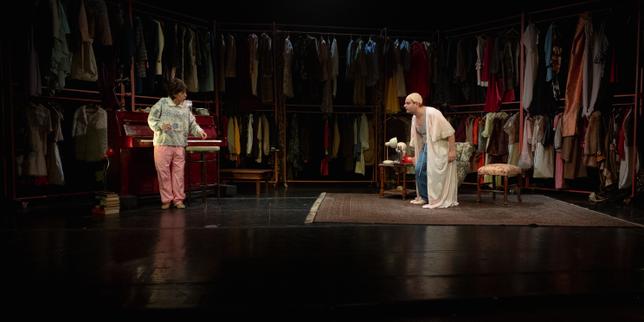
The neon lights of Avenida Corrientes are still bright, but behind the grand facades, something is breaking. While President Javier Milei plays the libertarian rock star at the Movistar Arena, singing 1980s covers to cheering crowds, the actual cultural heartbeat of Buenos Aires is fighting for oxygen. Argentine theatre has long been hailed as a miracle of resilience. It survived the dark days of the military dictatorship, the economic meltdown of 2001, and the global pandemic. But today, it faces an existential threat that is quieter, colder, and far more calculated.
This isn't just about inflation. It's about a systematic attempt to rewrite the DNA of a nation that expresses its soul on stage.
If you walk through the bohemian streets of Villa Crespo, Almagro, or San Telmo, you'll see the cracks. The independent theater scene, which historically boasts over 300 active plays on any given weekend, is bleeding. The numbers are devastating. Since the current administration took office, over 10% of the city’s independent theater spaces have closed their doors forever. This is the reality of a culture under the chainsaw.
The Dark Stage of 2026
To understand the crisis, you have to look at the stories of the spaces that built this city's reputation.
Take Timbre 4, the legendary theater founded by director Claudio Tolcachir in his own apartment. It’s an iconic symbol of how Argentines make art out of nothing. In March 2026, Tolcachir made a public statement that sent shockwaves through the local community. He admitted that the start of 2026 has been the hardest period in the theater’s history—far worse than the pandemic. When a space as globally renowned as Timbre 4 says it's in danger of drowning, the alarm bells should be deafening.
A few months later, in July 2026, Javier Margulis announced the closure of Mil80, an indispensable independent venue in Villa Crespo. Margulis didn't mince words. The mathematical reality of running a theatre under current economic conditions simply doesn't work anymore. When your audience can no longer afford the price of a cheap ticket because they are struggling to pay for electricity and food, the basic chain of cultural consumption breaks.
Here is what the government's economic team misses. Argentine theatre isn't a luxury. It’s a vital public utility.
The War on Cultural Memory
The administration's austerity policies have targeted the foundational pillars of the artistic community. There have been aggressive moves to defund and eliminate the Instituto Nacional del Teatro (INT), a body that has funded grassroots, independent, and regional plays across the country for decades. The budget for the Teatro Nacional Cervantes—the only national theater in Argentina—has been slashed ruthlessly.
This isn't just a fiscal decision. It's an ideological battle.
Argentine artists are convinced that the government views culture as a dangerous space for critical thought. Theatre in Buenos Aires has always been deeply political. It’s where people go to process collective trauma.
Even now, under intense financial pressure, the stage remains the primary arena for historical memory. Plays like Teresa Donato's Mi vida anterior, which tells the story of a militant mother who survived the dictatorship, or Lautaro Delgado Tymruk’s Seré, based on real escape testimonies from clandestine detention centers, are packing small rooms. These aren't commercial juggernauts designed to make money. They are acts of defiance. They keep the past alive in a political climate that often seeks to bury it.
Survival Tactics of the Underground
How do you keep the lights on when you can barely pay the utility bills?
Argentine artists are doing what they have always done. They are adapting. They are finding ways to bypass the traditional financial models that are currently suffocating the industry.
- The Cooperative Model: More than ever, actors, directors, and technicians are working on a cooperative basis. Instead of receiving upfront salaries, everyone takes an equal share of the box office receipts. It's risky, but it keeps the plays running.
- Aesthetic Minimalism: Grand sets and expensive lighting designs are out. Raw, actor-driven plays that require nothing more than a couple of chairs and a lightbulb are in. It forces a return to the absolute essence of storytelling.
- The Shared Venue System: Independent spaces are pooling resources. A single venue might host three different plays in a single evening, cycling audiences in and out to maximize ticket revenue and split the crushing cost of electricity.
The big commercial "tanks" on Avenida Corrientes—highly polished musicals and star-studded comedies—are still pulling in crowds who can afford premium tickets. But that's a different world. The real soul of Argentine theatre lies in the drafty basements and converted living rooms of the independent circuit. That's where the next generation of talent is forged. If you lose those rooms, the entire ecosystem collapses.
How to Support the Resistance
If you're visiting Buenos Aires, or if you simply care about global performing arts, you can't just be a passive observer. The best way to save Argentine theatre is to show up.
First, skip the massive commercial blockbusters for at least one night. Head to Almagro or Villa Crespo instead. Check listings on Alternativa Teatral, the definitive online portal for the independent scene.
Second, buy tickets directly from the venues. Avoid third-party resellers. Your money needs to go straight to the theater owners and the actors who are keeping these spaces alive.
Finally, talk about it. Spread the word. The world needs to know that behind the romanticized image of Buenos Aires as a cultural playground, the local artists are fighting a desperate battle for survival.
They are refusing to let the stage go cold. We shouldn't let them fight alone.