The headlines coming out of Beijing sound like pure science fiction. Chinese researchers claim they have successfully ground tested a morphing hypersonic ramjet engine that can literally change its shape while flying at more than five times the speed of sound. If you believe the initial hype, this shape shifting breakthrough solves the single biggest engineering bottleneck in hypersonic flight.
But if you understand the actual physics of extreme aerospace engineering, you know that adding moving parts to a hypersonic flow stream is a terrifyingly high-risk gamble.
The ground test, heavily discussed in Chinese state media and academic circles, targets a problem that has plagued aerospace engineers since the Cold War. At Mach 5 and beyond, air behaves less like a fluid and more like a chaotic wave of destructive energy. Conventional engines melt or choke. To survive, engines have to be designed with highly specific, rigid geometries. The problem is that an inlet shape perfect for cruising at Mach 6 is completely useless for accelerating at Mach 3.
By testing an air-breathing engine that mechanically alters its internal structure mid-flight, China's military scientists think they have found a way to bridge that gap. Let's look at what actually happened in the test cells, why the engineering is so brutally difficult, and why this design might end up being a magnificent technological dead end.
The Brutal Problem of the Hypersonic Handoff
To understand why anyone would try to build a shape shifting engine, you have to understand why current hypersonic aircraft are so deeply flawed.
Right now, if you want to fly at Mach 6 using an air-breathing engine, you have a massive physics problem. You cannot start a ramjet or a scramjet from a dead stop on a runway. These engines have no moving compressor blades to suck in air; they rely entirely on the forward speed of the vehicle to ram incoming air into the combustion chamber. A ramjet needs to be moving at roughly Mach 2 to start working, and a scramjet usually requires at least Mach 4.5 just to wake up.
To get around this, engineers traditionally rely on two deeply flawed workarounds.
- The Rocket Booster Method: You bolt a massive solid rocket booster to the back of the vehicle. The rocket launches it, burns out, drops off as dead weight, and then the air-breathing engine takes over. It is simple, but it means the vehicle is completely non-reusable and highly inefficient.
- The Turbine-Based Combined Cycle (TBCC): This rolls two distinct engines into one package. You use a standard jet turbine to take off and reach Mach 2.5, then you shut it down, redirect the airflow into a separate ramjet channel, and accelerate to hypersonic speeds.
The problem with a combined cycle system is the handoff. The transition phase where the turbine shuts down and the ramjet opens up is an aerodynamic nightmare. Airflow inside the engine changes violently in milliseconds. The aircraft shudders, pressure spikes wildly, and if the air choking or unstart occurs, the engine explodes or flameouts instantly. The American X-51A Waverider program ran into these exact structural and fluid dynamics failures during its testing history, succeeding only once in four attempts before being retired.
China's new approach tries to bypass this entire handoff by making a single engine channel that morphs its inner geometry to handle both regimes.
Inside the Test Cell
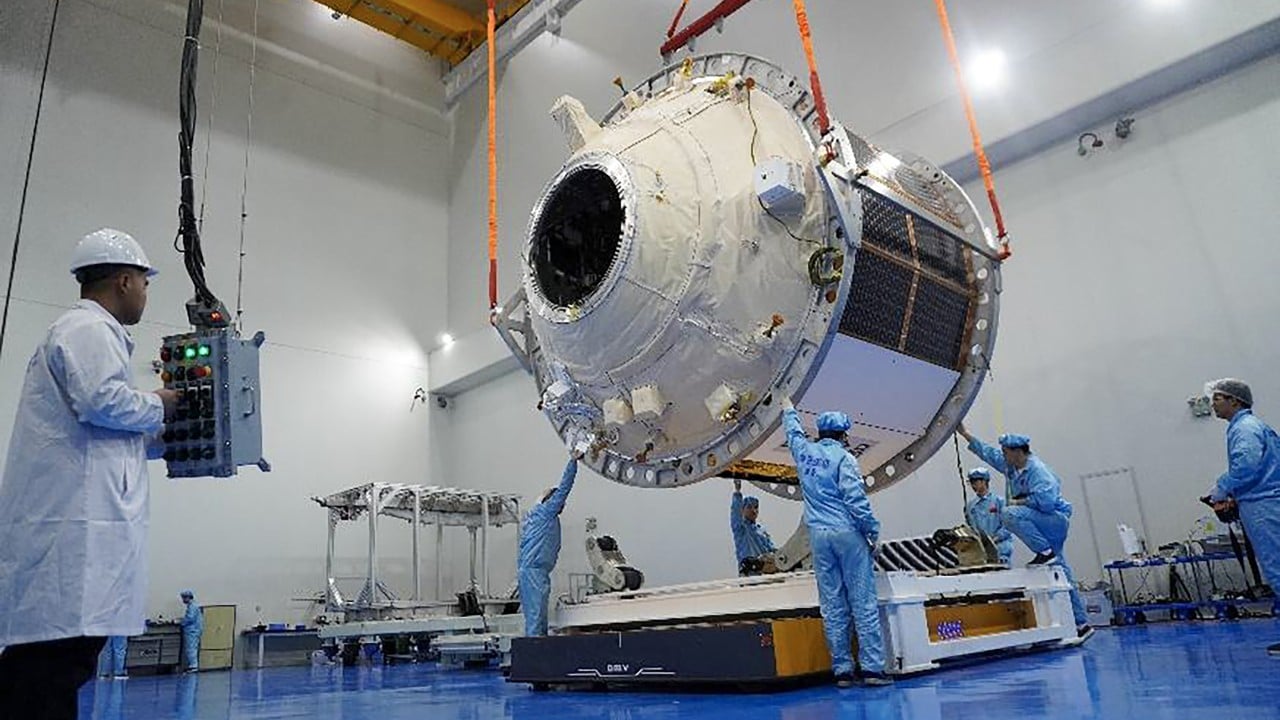
The recent test focused on a statorless, counter-rotating ramjet setup. In a traditional jet engine, you have rotors (spinning blades) and stators (stationary guide vanes that direct the air). For over a century, stators have been standard equipment to keep airflow civilized.
The research team, pulling from long-standing conceptual frameworks at institutions like the Chinese Academy of Sciences, threw out the stators completely.
Instead, they packed the inlet with two sets of compressor blades spinning in opposite directions. When the vehicle is moving slowly, these counter-rotating blades act like a high-powered fan, mechanically forcing air into the chamber to generate thrust from a standstill.
As the speed climbs toward the supersonic and hypersonic boundaries, the true mechanical transformation happens. The engine shifts its internal surfaces. By physically altering the geometry of the inlet and adjusting the pitch or position of these internal components, the engine stops trying to smoothly redirect the air. Instead, it intentionally generates a series of controlled shock waves.
These shock waves are essentially violent pressure spikes that form when air hits a barrier at supersonic speeds. In a morphing ramjet, these shock waves do the heavy lifting of compressing the air, doing the job of four to six stages of traditional, heavy mechanical compressor blades. The prototype allegedly achieved high fuel efficiency and stable combustion during the simulated ground runs.
Why Moving Parts at Mach 6 Are an Engineering Nightmare
On paper, a morphing engine looks brilliant. In reality, it introduces points of failure that could easily tear an aircraft apart.
When you are flying at Mach 6, the air entering the engine is compressed so severely that its temperature spikes to thousands of degrees. This isn't just regular heat; it is an environment that actively degrades standard aerospace alloys within minutes.
In a fixed-geometry scramjet, you can manage this heat by running the liquid fuel through the walls of the engine to cool them down before the fuel is injected into the burner. It is a closed-loop cooling system.
Now imagine trying to do that with moving parts. You have linkages, hinges, actuators, and rotating blades that all need to shift position while being blasted by a hypersonic blowtorch. If a single mechanical actuator expands by a fraction of a millimeter due to thermal stress, the morphing mechanism jams. If it jams while the engine is configured for lower speeds, the incoming airflow will choke the engine, causing a catastrophic structural failure of the airframe.
There is also the issue of mechanical complexity versus weight. Hypersonic vehicles survive on razor-thin margins. Every ounce of weight you add in the form of hydraulic lines, mechanical joints, and heavy thermal shielding for the morphing mechanisms reduces the payload or the fuel capacity of the craft.
Many Western aerospace firms have deliberately avoided this path for a reason. They view mechanical morphing in a hypersonic stream as a high-maintenance dead end. The prevailing philosophy in places like the US Naval Research Laboratory and major defense contractors has historically leaned toward solving the problem through advanced fluid dynamics—using magnetic fields, plasma actuators, or smart fuel injection to alter the airflow virtually without moving a single piece of metal.
What This Actually Means for the Hypersonic Race
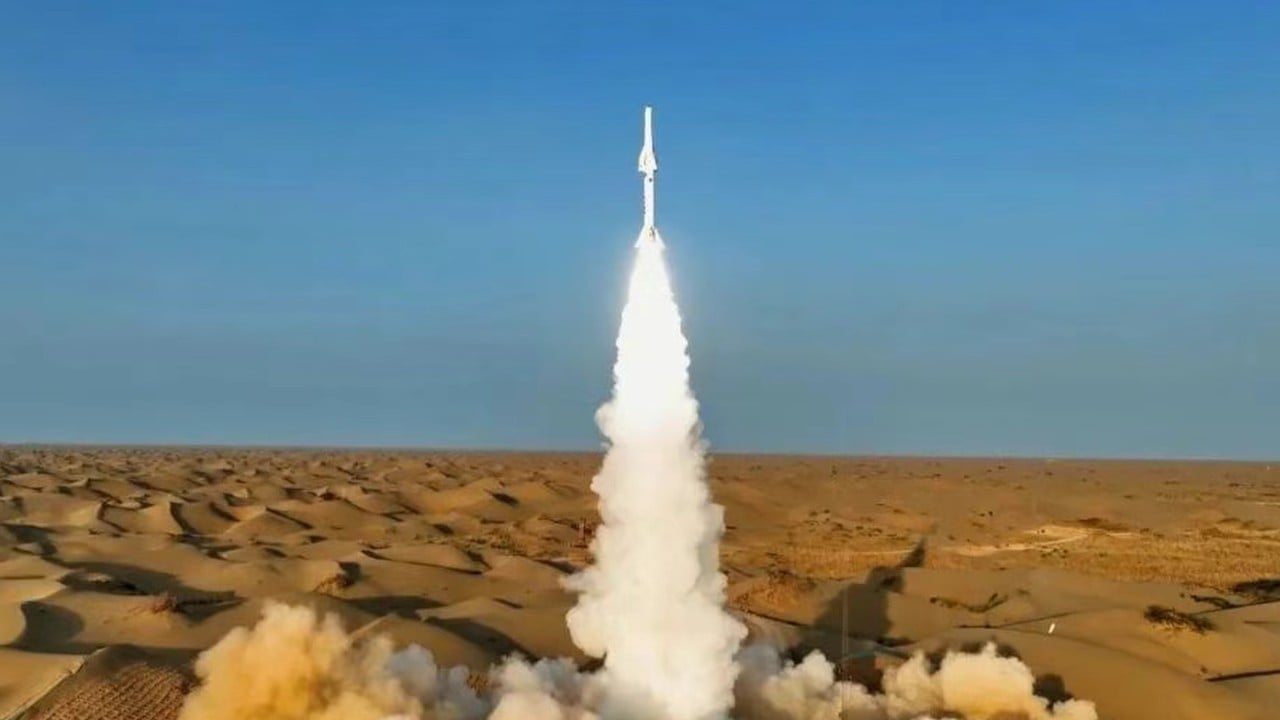
Don't expect to see a shape shifting Chinese fighter jet flying over the Pacific anytime soon. Ground testing an engine inside a heavily instrumented wind tunnel facility is light-years away from an operational weapon system or a reusable spaceplane.
In a ground test, you can control the variables. You can pre-heat the air, stabilize the pressure, and isolate the engine from the violent vibrations, pitch changes, and atmospheric turbulence of actual flight.
What this test does show is that China is willing to fund parallel, highly risky engineering concepts to see what sticks. They aren't just betting on traditional scramjets or liquid rockets. They are actively exploring bizarre hybrid mechanical systems to see if they can break the physics barrier of the hypersonic handoff.
If they manage to translate this into a successful flight test, it would give them a massive advantage in developing single-stage-to-orbit spaceplanes and long-range, reusable reconnaissance drones. Vehicles that could take off from a standard runway, sprint to near-space at Mach 6, and return home without dropping booster stages across the ocean.
But until they can prove those mechanical hinges don't weld themselves shut or snap under the unfathomable stress of a Mach 6 air stream, it remains an incredibly sophisticated, dangerously complex experiment.
The next step isn't more wind tunnel data. It is a live flight test. Watch the skies over the remote testing grounds in western China over the next few years. That is where we will find out if shape shifting propulsion is the future of aviation, or just an expensive way to melt titanium.