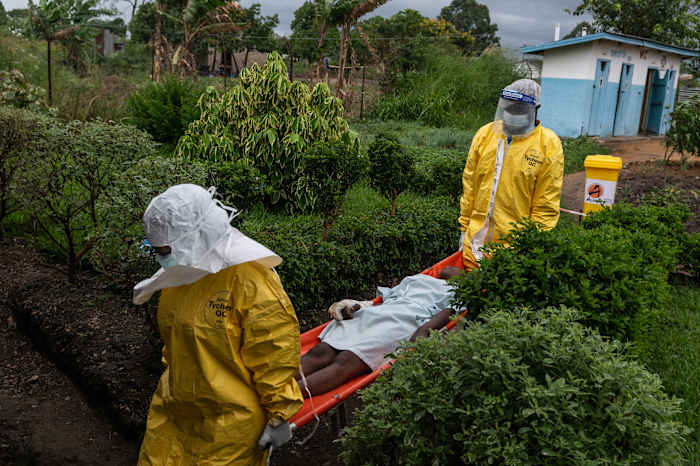
Frontline health workers are walking away from treatment centers in the Democratic Republic of Congo right now. They aren't running from the deadly virus. They're striking because they haven't been paid since the outbreak was declared on May 15. With the death toll rapidly climbing toward 600, this sudden work stoppage threatens to trigger an absolute catastrophe.
When an epidemic spreads faster than the response, you don't stall payments to the people tracking cases and burying bodies. Yet that's exactly what's happening in Ituri province, the epicenter of the current crisis. If you want to understand why this Congo Ebola outbreak is spiraling out of control, you have to look at the massive disconnect between government promises and the reality on the ground.
The Breaking Point in Ituri Province
People often assume frontline medical staff in outbreaks are fully backed by endless international cash. They aren't. In eastern Congo, doctors, nurses, security teams, and community investigators are working around the clock without basic compensation. Over the weekend, these workers issued a strict 24-hour ultimatum to provincial and national authorities. Pay the wages, or the clipboards and protective suits get dropped.
By Tuesday, the walking off began. No official market-wide strike declaration was signed, but the impact was instant. At the Rwampara Ebola treatment center, angry staff burned tires in protest. The local police had to step in to settle the panic.
Think about the sheer desperation required to strike when a lethal pathogen is actively killing your neighbors. Medical workers are spending their own money on transportation just to get to hot spots like the mining town of Mongbwalu. Dr. Ghislain Maneba, an epidemiologist working the front lines, made it clear that they're working day and night for nothing. They feel completely abandoned by the leadership in Kinshasa.
Why Funding Is Stalled
Local officials claim they are trying to fix things. They blame the delayed payments on infrastructure. Specifically, the airport in Bunia is closed.
According to Akilimali Pierre, the incident manager at Congo's National Institute of Public Health, this closure has crippled the physical movement of response funds. It sounds like a bad bureaucratic excuse when people are dying, but cash-based economies rely on physical transit. If you can't fly money into an isolated province, you can't pay the local teams.
Meanwhile, high-level teams sent from the capital are facing accusations of arrogance. Local health workers claim that officials from Kinshasa show up, take the lead, and bring in labor from other provinces instead of utilizing the local professionals who know the terrain best. It's a textbook example of how poor administration destroys local trust during a health crisis.
The Dangerous New Strain With No Vaccine
The administrative failure is happening at the worst possible moment. This specific outbreak is driven by the Bundibugyo virus strain. That's a massive problem.
Most people remember the highly successful vaccines used in recent years to halt Ebola. Those vaccines targeted the Zaire strain, which caused the majority of Congo's past 16 outbreaks. For the Bundibugyo strain, there is no approved vaccine or standard therapeutic treatment available for wide distribution.
Medical teams just started enrolling patients for clinical trials to test new treatments. A strike means those trials could stall before they even collect meaningful data. Without clinical trials, finding a tool to fight this strain becomes impossible.
The numbers tell a terrifying story. The latest official tallies show 1,708 recorded cases and 580 deaths. The World Health Organization confirmed that the very first month of this outbreak was the worst on record for any similar event.
Violence and Skepticism Over the Outbreak
Unpaid wages are only half the battle. Frontline workers are literally risking their lives every time they step into a village. Deep-seated community skepticism and anger frequently boil over into physical violence.
Dr. Ben Bakule, a community investigator, recently shared how he barely escaped death in late May. While trying to trace contacts of a confirmed Ebola patient in the village of Tutu, located in Djugu territory, a mob of angry young men attacked his team.
When you combine the risk of being hacked to death by suspicious locals with the risk of catching a hemorrhagic fever, you expect a paycheck. Expecting people to face those dual threats for zero financial reward is unsustainable. Workers are realizing they're risking their lives for nothing, and they're ready to quit for good.
The Ripple Effect on Local Communities
The breakdown of the medical response is sending shockwaves through Ituri's towns. Regular residents are terrified. Measures designed to slow the virus have already caused immense economic hardship across the region. Markets are quieter, movement is restricted, and supply chains are frayed.
Local vendors, like tomato seller Anifa Kito in Bunia, are watching the health workers strike with dread. If the doctors leave, the virus spreads faster. If the virus spreads faster, the lockdowns and economic stagnation drag on. The entire local economy is tied directly to how fast these treatment centers can isolate the sick. Right now, those centers are at near-full capacity.
Congo's Minister of Health, Roger Kamba, previously claimed that the government was prioritizing working conditions and that all doctors and nurses would be fully supported. He insisted the money was there. But his words don't buy food for the families of doctors who haven't seen a paycheck in nearly two months.
Moving Past the Chaos
Resolving a public health emergency requires fixing the logistical and financial pipelines immediately. Air strips must be bypassed or cleared to get cash and supplies directly to Ituri. Local labor must be prioritized over outside teams to rebuild trust within the medical ranks. If the financial bottlenecks aren't cleared within days, the flight of medical professionals will leave treatment centers completely unguarded against a virus that doesn't care about bureaucratic delays.