You stand in front of a mountain of mac and cheese, holding a heavy plastic plate. Next to it sits a tray of glistening fried chicken, a vast expanse of mashed potatoes, and a soft-serve ice cream machine that has seen better days. For a single flat price, you can eat until you literally cannot move. It is a scene that defined casual dining for generations of Americans.
But it is also a scene that is quietly vanishing.
The classic American buffet is not just struggling. It is on life support. Long before a global pandemic made the idea of shared serving utensils terrifying, the economic foundation of the all-you-can-eat model was already cracking. Between 2007 and 2017, buffet sales in the United States plummeted by roughly 25%. When 2020 arrived, the remaining giants were practically wiped off the map. Souplantation permanently closed all 97 of its locations. Parent companies like Fresh Acquisitions, which owned old favorites like Old Country Buffet, Ryan's, and HomeTown Buffet, went bankrupt and dissolved.
The truth is, consumer tastes shifted, food costs exploded, and the clever psychological tricks that once kept these businesses profitable stopped working. The traditional buffet is dying because the math no longer makes sense for operators, and the experience no longer makes sense for diners.
The Post War Boom That Built the Trough
The modern all-you-can-eat concept did not start as a corporate strategy. It started as a gimmick to keep gamblers from leaving the tables. In the 1940s, a Las Vegas promoter named Herb McDonald tossed some cold cuts and cheese onto a bar at the El Rancho Vegas casino. The goal was simple. Keep people fed so they would stay inside and keep betting. Other legends tie the origin to mobster Davie Berman, who laid out massive spreads of Jewish brunch delicacies to appease hungry high-rollers.
No matter who actually thought of it first, the concept spread across the nation like wildfire because it solved a massive macroeconomic problem.
Following World War II, American agriculture experienced a massive boom. Thanks to rapid advancements in synthetic fertilizers, motorized equipment, and agricultural genetics, U.S. farm production nearly tripled between 1948 and 2017. Suddenly, America had an absolute mountain of cheap food. The agricultural system was producing far more calories than citizens knew what to do with.
The all-you-can-eat buffet became the ultimate celebration of this agricultural abundance. Chains like Golden Corral, Ponderosa, and Ryan's popped up along highway exits and suburban strips. They offered families a chance to participate in the American Dream via a massive dinner plate. For a working-class family, it felt like an incredible value. You could feed a minivan full of hungry kids for a flat, predictable fee.
The Hidden Math Behind the Mountain of Macaroni
To understand why the model collapsed, you have to look at the fascinating, highly specific financial engineering that kept it alive for so long. People often wonder how a restaurant can stay profitable when a high school football team walks through the door and eats five plates of prime rib each.
The answer is a delicate mix of behavioral psychology and cheap starch.
Buffet operators design every single inch of the dining room to manipulate your choices. They know the average human stomach can hold about one to two pounds of food. The entire business model relies on filling that space with the cheapest inventory possible before you ever reach the expensive proteins.
Layout Manipulation
The layout is never an accident. When you walk up to a food line, the very first items you encounter are heavy, carb-laden filling foods. You see giant pans of rice, rolls, potato salad, and pasta. Your plate is empty, you are hungry, and you instinctively load up on these items. By the time you reach the carved roast beef or the shrimp at the far end of the line, your plate has very little physical real estate left.
Utensil Engineering
Look closely at the tools provided. The spoons inside the mac and cheese or mashed potato trays are massive, allowing you to scoop huge portions effortlessly. The tongs near the beef tenderloin or carved ham are small and awkward. They force you to take tiny, delicate portions. Even the plates themselves are engineered. Buffets frequently use smaller dinner plates than traditional sit-down restaurants, which trick your brain into thinking you are eating a massive feast while limiting the physical volume of food you can carry back to your table.
Bulk Buying and Low Labor
Buffets buy ingredients in massive quantities, keeping food costs lower than a standard kitchen. They also save heavily on front-of-house labor. You act as your own waiter, your own food runner, and your own portion controller. A minimal kitchen staff prep large batches of food ahead of time, which eliminates the need for expensive line cooks who cook dishes to order.
The Poisoning and the Multiple Bankruptcies That Killed the Giants
So, what changed? First, the corporate structures behind these chains became bloated and fragile. Take the tragic trajectory of Old Country Buffet. In 2006, its parent company merged with Ryan's Restaurant Group, creating a massive empire. But the newly formed corporation was drowning in debt.
The parent company filed for Chapter 11 bankruptcy in 2008. Then they filed again in 2012. Then they filed a third time in 2016. Each bankruptcy resulted in hundreds of store closures, turning once-vibrant community hubs into abandoned suburban eyesores.
The brand also suffered a catastrophic reputational hit from a massive health crisis. In 2010, a couple dined at an Old Country Buffet in Cheyenne, Wyoming, and contracted a severe case of salmonella poisoning from undercooked chicken. The husband suffered septic shock, renal failure, and permanent brain damage. It turned out the local health department had already cited the location for multiple health violations. The family sued, and a judge eventually awarded them an $11.37 million judgment. For a company already suffocating under debt, that kind of press and financial blow is a death sentence.
Simultaneously, American culture shifted away from the buffet ethos. In the 1980s and 1990s, value meant quantity. People wanted the biggest portion possible for the lowest price.
By the mid-2000s, value meant quality and customization.
The rise of fast-casual empires like Chipotle changed everything. Diners realized they could get high-quality ingredients, fresh prep, and rapid service without sitting in a massive room surrounded by hundreds of strangers coughing near an open salad bar. The growing national awareness around obesity, calorie counting, and healthy eating made the endless trough model look less like an indulgence and more like a health hazard.
The Modern Survivors Turning Chaos into Capital
Despite the wreckage, the buffet concept is not entirely dead. It is just evolving into something unrecognizable to the diners of the 1990s. The operations that survived the great purge did so by changing the rules of the game.
The Regional Megacity
Look at Shady Maple Smorgasbord in East Earl, Pennsylvania. It is America's largest buffet, a massive 110,000-square-foot facility that serves up to 8,000 people on a busy Saturday. They do not rely on a failing national franchise model. They rely on intense local loyalty, massive scale, and a hyper-efficient operation that serves traditional Pennsylvania Dutch comfort food. They make the buffet a destination experience rather than a cheap Tuesday night dinner option.
Buffet Era Breakdown:
1940s-1970s: The Casino Gimmick (Vegas origins, keeping gamblers at tables)
1980s-1990s: The Golden Age (Massive nationwide chains, family value)
2000s-2010s: The Great Decline (Shifting health trends, corporate bankruptcies)
2020-Present: The Hybrid Evolution (Upscale Vegas experiences, specialized regional spots)
The Luxury Experience
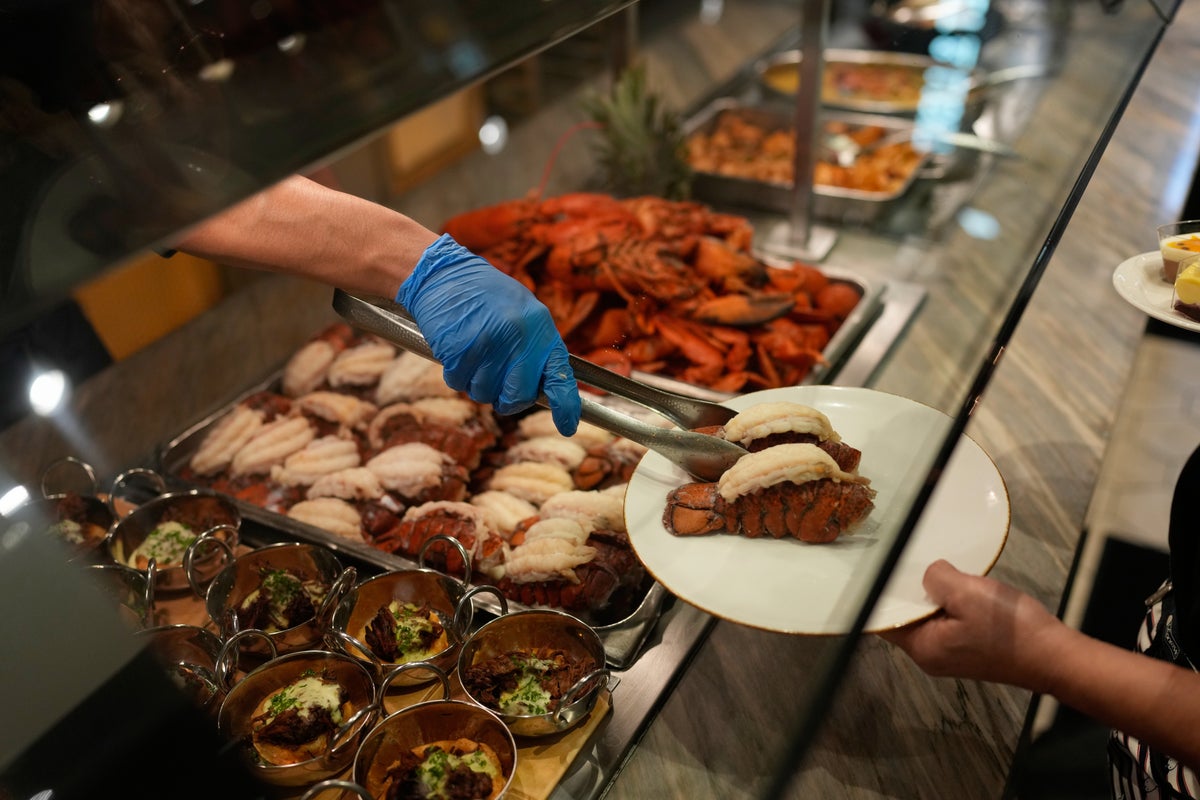
In Las Vegas, the birthplace of the buffet, the cheap $4.99 midnight spread is gone forever. In its place are luxury experiences like the Bacchanal Buffet at Caesars Palace or The Wynn Buffet. These are not cheap family feeding stations. They charge $70 to $90 or more per person. They feature open kitchens where chefs prepare individual small plates, gourmet seafood stations, and high-end global cuisine. The value proposition is no longer "eat cheap food until you pop." It is "sample dozens of high-end delicacies that would cost hundreds of dollars if ordered à la carte."
The Made to Order Model
Other operators are shifting to a sit-down and served format. Many modern all-you-can-eat sushi and hot pot restaurants give you unlimited food, but you order via an iPad at your table. The kitchen prepares the food fresh, and staff bring it directly to you. This completely eliminates the hygiene concerns of the old-school open food line while drastically reducing food waste, because patrons can only order a few items at a time.
Your Next Steps as a Savvy Diner
If you still love the nostalgic thrill of a bottomless meal but want to avoid a mediocre, sketchy dining experience, you have to change how you choose your spots. Drop the generic, dying suburban chains that are cutting corners on food safety just to stay afloat. Instead, look for businesses utilizing the modern playbook.
Seek out high-turnover, specialized concepts like Brazilian steakhouses, Korean barbecue spots, or all-you-can-eat sushi venues where the food is kept behind the kitchen counter until you ask for it. You get the financial predictability of a fixed price without the lukewarm mashed potatoes and communal germs. The golden era of the classic American trough is over, and honestly, our stomachs are probably better off for it.