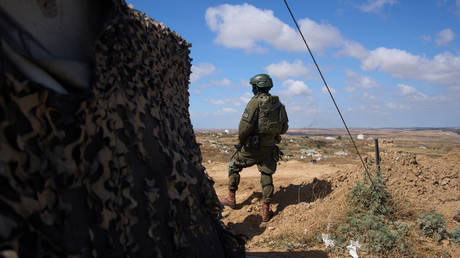
The border between Israel and Lebanon has been a powder keg for decades, but lately, the conversation has shifted from temporary military incursions to something much more permanent. When analysts look at the current escalation, they aren't just seeing a tactical campaign to push back Hezbollah. Instead, observers like Professor Seyyed Mohammad Marandi are warning that we might be witnessing the early stages of a long-term territorial grab.
It sounds extreme. Some would say it's just wartime rhetoric. But when you look closely at the historical precedents, the current political climate in Jerusalem, and the shifting dynamics of the region, the idea of a permanent Israeli occupation in southern Lebanon stops sounding like a conspiracy theory and starts looking like a distinct possibility.
Understanding this conflict requires looking past the daily headlines. You have to understand the underlying strategic motivations that drive both sides.
The Rhetoric and the Reality on the Ground
We've heard the official statements before. The Israeli government insists its military operations north of the border are strictly defensive, aimed at securing the northern communities so displaced citizens can return home safely. It's a clear, digestible narrative.
But regional experts are highly skeptical. Critics point out that military buffers have an uncomfortable habit of becoming permanent fixtures. Professor Marandi, an academic who frequently reflects the broader geopolitical stance of the Axis of Resistance, argues that Israel's true ambitions stretch far beyond a simple security zone. He suggests that certain factions within the Israeli political establishment view southern Lebanon, and even parts of Syria, as territory to be brought permanently under Israeli influence or outright control.
Is this just propaganda? Not necessarily. To figure out if these fears are grounded in reality, we have to look at how Israel has managed territory in the past.
Historical Precedents of Israeli Territorial Management:
- 1967: Capture of the Golan Heights from Syria (Later annexed in 1981)
- 1978: First major incursion into Lebanon (Operation Litani)
- 1982-2000: Security Zone occupation of Southern Lebanon (18-year presence)
The historical record shows a pattern. The Golan Heights, captured from Syria in 1967, were eventually annexed in 1981. The West Bank remains under an ongoing occupation that has lasted for more than half a century. Southern Lebanon itself was occupied for eighteen years, from 1982 until Israel's withdrawal in 2000. When you have a history of turning temporary security operations into decades-long presence, people are going to assume you'll do it again.
Why Southern Lebanon is Domestically Important to Israel
To understand why anyone would want to hold onto southern Lebanon, you have to look at the geography. This isn't just empty land. It's a strategic high ground that commands a view of northern Israel. It's also home to crucial water resources, specifically the Litani River, which has been a point of strategic interest for over a century.
Inside Israel's current political coalition, the ideological center of gravity has shifted far to the right. Ideologues within the government don't just talk about security. They use historical and biblical frameworks to justify territorial expansion. For some fundamentalists, the northern border isn't a fixed line drawn by colonial powers in the twentieth century. It's a fluid frontier.
When these political figures talk openly about resetting the borders or establishing permanent settlements to ensure security, it sends shockwaves through Beirut and Damascus. It makes the civilian population in Lebanon realize that this war might not end with a simple ceasefire.
The Escalation Cycle and the Role of Global Powers
We can't talk about Lebanon without talking about Washington. The United States has traditionally acted as a balancing force, trying to prevent regional wars from spiraling completely out of control. But the reality is that American foreign policy often gives Israel immense latitude when it comes to military operations.
During major escalations, Washington frequently provides the diplomatic cover and military supply lines necessary for extended campaigns. This reality makes regional actors believe that if Israel decides to dig in its heels and stay in southern Lebanon, the international community won't do much to stop it.
This dynamic shapes how groups like Hezbollah and states like Iran react. If they believe Israel is planning a permanent stay, their strategy changes completely. They don't fight a conventional war to hold a specific line. They pivot to a brutal, prolonged war of attrition.
What Most People Get Wrong About a Potential Occupation
A lot of casual observers think that an occupation means rolling in tanks and setting up governing councils overnight. That's a massive oversimplification. Modern territorial control is much more subtle, especially in its early phases.
An occupation usually starts with a "buffer zone." The military clears out the local population, flattens infrastructure, and establishes heavily fortified outposts. They claim it's a temporary measure to protect civilians back home. Then, months turn into years. The security situation never quite feels safe enough to justify a withdrawal. The temporary outposts get upgraded with concrete and permanent supply routes. Before you know it, a generation has grown up with the new status quo.
This is exactly what happened during the 1982 to 2000 occupation. It wasn't advertised as a permanent land grab at the start. It was supposed to be a limited operation to push PLO forces back. Yet, the military stayed for nearly two decades, entangling Israel in a costly guerrilla war that eventually became politically unsustainable at home.
The High Cost of Staying Put
If the Israeli leadership is seriously considering a permanent presence in Lebanon, they're ignoring the immense costs involved. Southern Lebanon isn't an easy place to hold. The terrain is rugged, mountainous, and tailor-made for guerrilla warfare.
Hezbollah was literally built for this exact scenario. The group spent decades digging tunnels, mapping out ambush points, and stockpiling anti-tank missiles in those hills. They know the terrain infinitely better than any invading force. An Israeli decision to occupy that territory permanently wouldn't bring peace to the north. It would mean signing up for an endless stream of casualties, heavy financial strain, and deep domestic division within Israel itself.
Furthermore, a permanent occupation would completely alienate Israel's remaining partners in the region and destroy any hope of normalization with Arab states. The diplomatic isolation would be severe, turning what was meant to be a security triumph into a long-term strategic trap.
What Comes Next
We're at a critical turning point. The international community needs to watch the nature of the Israeli military operations closely. If the focus remains on destroying rocket launchers and retreating, then the official defensive narrative holds up. But if we start seeing the systematic demolition of entire villages along the border, the creation of permanent military roads, and the establishment of long-term outposts, the reality will be undeniable.
If you want to keep track of where this situation is headed, look past the official press releases from Jerusalem or Washington. Watch the infrastructure on the ground. Watch the language used by coalition ministers. The signs of a permanent occupation won't be announced in a grand speech. They will be built, yard by yard, in the hills of southern Lebanon.