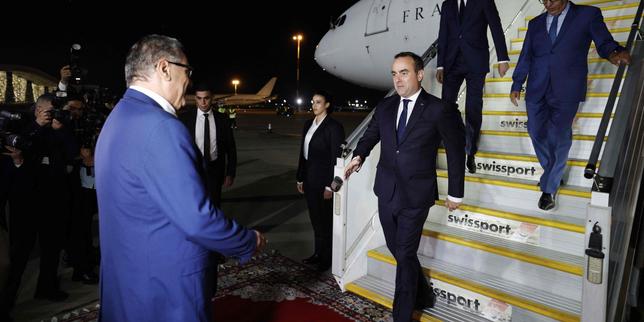
Diplomats love a good photo op. They smile, shake hands, and sign beautifully bound agreements under glittering chandeliers. If you watched the recent diplomatic dance between Paris and Rabat, you might think the two old partners are back in a passionate embrace. The tone is polite. The official statements are polished. There are no public disagreements.
But don’t let the polite smiles fool you.
Behind the scenes, the grand reset everyone expected is turning into a slow crawl. France made the massive move of recognizing Moroccan sovereignty over Western Sahara. That was supposed to unlock a flood of historic deals and create a brand-new era of cooperation. Instead, we are looking at a relationship that is functioning, polite, and completely stagnant.
It is a partnership stuck in second gear. Let's look at why the big breakthrough never happened, and what is actually holding these two nations back from taking things to the next level.
The Illusion of the Great Leap Forward
For years, the relationship between Paris and Rabat was frozen solid. The issues were obvious. France slashed visas for Moroccans, Rabat recalled its ambassador, and Paris tried to play a delicate balancing act with Algeria.
Then came the big shift. France finally aligned itself with Morocco's position on Western Sahara.
Diplomats in Paris assumed this major concession would immediately open every door in Rabat. They expected French companies to walk away with every major infrastructure contract in the kingdom. They thought the old exclusive partnership would resume overnight.
That was a massive miscalculation.
Rabat accepted the diplomatic win, thanked Paris, and then went right back to business as usual. Morocco did not hand over the keys to its economy. The expected "change of scale" in the bilateral relationship has simply not arrived.
The reality is that Morocco has spent the last decade growing up. The country has diversified its partnerships. It does not need to rely solely on its former colonial power anymore. Rabat is playing a global game now, and France is just one of many players at the table.
Why Western Sahara Was Only the Entry Fee
Paris treated its endorsement of Morocco's autonomy plan for Western Sahara as a grand, generous gift that deserved an immediate reward. Rabat saw it very differently.
To the Moroccan monarchy, French support was not a favor. It was a late correction of a historical error. It was the bare minimum required just to get back into the room.
Once France paid that entry fee, the real negotiations started. But Paris soon realized the room was already crowded.
- Spain had already made its own move on Western Sahara years earlier and locked in deep commercial ties.
- The United States recognized Moroccan sovereignty back in 2020, cementing a deep strategic alliance.
- China has been quietly funding massive port infrastructure and industrial parks.
- Germany has positioned itself as a preferred partner for green energy projects.
France expected to walk back in and claim its old monopoly. Instead, French negotiators found themselves competing in a highly contested market where sentimentality does not win contracts.
The Brutal Economic Competition
Nowhere is this stagnation clearer than in the economic sector. Morocco is preparing to co-host the 2030 FIFA World Cup. The country is rapidly building high-speed rail lines, massive stadiums, and green energy plants.
French engineering firms, historically the default choice for these mega-projects, now have to fight for their lives.
Take the extension of the high-speed rail line (TGV) linking Kenitra to Marrakech. France's Alstom built the first phase of Morocco's high-speed rail network and expected to get the second phase automatically. But Rabat opened the floor to international competition. Spanish, Chinese, and Korean companies put forward highly competitive bids.
Morocco is no longer interested in just buying French machinery. Rabat wants technology transfer. They want local factories. They want Moroccan engineers trained to build and maintain these systems locally. Spain has been incredibly aggressive in meeting these demands, often outmaneuvering French bids with more flexible financing and better local integration plans.
The same story is playing out in the green hydrogen sector. Morocco has some of the best solar and wind resources on the planet. European nations are desperate to import Moroccan green energy. But Germany and even smaller European nations were much faster than France to sign concrete, mutually beneficial agreements.
Paris has been slow to adapt to a Morocco that negotiates as an equal.
The Algerian Tightrope and Regional Realities
France is also handcuffed by its own geopolitical baggage.
Paris cannot fully commit to Morocco without completely destroying its relationship with Algeria. Algeria is Europe's second-largest gas supplier and a critical partner for security in the Sahel region.
French President Emmanuel Macron has spent years trying to build a complex, balanced policy toward North Africa. This balancing act has pleased absolutely no one.
When France tilts toward Morocco, Algiers gets angry and cuts off cooperation. When France tries to appease Algeria, Rabat pulls back.
This hesitation is highly visible to Moroccan officials. They see a French government that wants the benefits of Morocco's economic rise but is too nervous to fully alienate Algeria. In contrast, partners like Spain have taken a clearer, more decisive stance, allowing them to build more consistent policies with Rabat.
The Cultural Shift and the Visa Scar
Diplomacy is not just about presidents and CEOs. It is about people. And on the human level, the split between France and Morocco is growing wider.
The "visa war" of 2021 and 2022, where France arbitrarily rejected tens of thousands of visa applications from Moroccan students, business owners, and academics, left deep scars. Even though the visa quotas have been lifted and things are technically back to normal, the damage is done.
A whole generation of young, highly educated Moroccans realized that relying on France was a risk.
They saw their parents, doctors, and business partners humiliated by French consular officials. As a result, the cultural magnetism of Paris is fading fast.
Moroccan students are increasingly choosing to study in English-speaking countries, Canada, or the Gulf. English is rapidly replacing French as the language of business and technology among the youth in Casablanca and Rabat. The historical cultural bridge that bound these two nations together is slowly but surely eroding.
What Needs to Change Next
If France and Morocco want to build a relationship that actually moves forward instead of just standing still, they need to abandon the old colonial-era playbook. Here is what needs to happen next.
Stop treating Morocco as a traditional sphere of influence
French policymakers must accept that Morocco is a sovereign, mid-sized power with global options. Treat Rabat the same way you would treat Tokyo, Seoul, or Brasilia.
Focus on co-development rather than pure export
French companies cannot just sell finished goods to Morocco. They must invest in local manufacturing, build factories on Moroccan soil, and actively transfer technology to Moroccan workers.
Resolve the bureaucratic friction of human mobility
If you want to build a shared economic space, you cannot treat Moroccan business leaders and students like security threats at the visa office. Consular services must become predictable and respectful.
The diplomatic frost has melted, but the ground is still cold. Until both sides realize that the old status quo is gone forever, we will continue to see polite summits, nice speeches, and very little real progress.