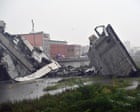
On August 14, 2018, Genoa was hit by a torrential summer downpour. It was the eve of Ferragosto, Italy's major national holiday, and families were driving across the city's iconic Morandi bridge. Without warning, a massive 200-meter section of the concrete structure sheared away. Dozens of cars and trucks plunged 50 meters into the dry riverbed and railway tracks below.
Forty-three people died that day.
Now, almost eight years later, a major legal decision has arrived. On July 16, 2026, an Italian court sentenced Giovanni Castellucci, the former chief executive of motorway operator Autostrade per l'Italia (ASPI), to 12 years in prison.
The verdict comes after a massive, grinding trial that lasted four years and required over 280 hearings. In total, the court convicted 32 people, handing down sentences of up to 11 years to other former executives and technicians.
This is a massive moment for corporate accountability. It shows what happens when safety takes a back seat to financial returns. It is also a wake-up call for privatized public infrastructure across the globe.
Inside the Room Where Justice Was Served
The atmosphere inside the Genoa courtroom was incredibly tense. Nearly 400 people packed the space, including journalists, lawyers, and the relatives of those who died. When presiding judge Paolo Lepri read out the long list of convictions, the room fell into complete silence.
For many family members, the rulings brought a mixture of relief and heavy grief. Egle Possetti, who lost her sister, brother-in-law, and two young niblings in the collapse, explained that she wanted the state's responsibility to be clear. She wanted the court to acknowledge that this was not some unpredictable natural disaster. It was a predictable tragedy caused by failures in maintenance.
The prosecutors did not pull any punches. They argued that the leadership of ASPI and its engineering subsidiary, Spea, routinely put off vital structural repairs. Why? To maximize profits and keep payouts high for their parent company, Atlantia, which was controlled by the wealthy Benetton family. The prosecution originally asked for an 18-year sentence for Castellucci, arguing that he presided over a culture of calculated neglect. While his 12-year sentence is shorter than requested, it still sends a clear message.
Castellucci was not actually in the courtroom to hear his fate. He is already behind bars, serving a six-year sentence for a different disaster. That case involved a 2013 coach crash on a southern Italian viaduct that killed 40 people. His legal team immediately attacked the new verdict, calling it a defeat for the truth and claiming that blaming the chief executive is just a convenient scapegoating tactic. They plan to appeal. Under the Italian legal system, defendants can appeal a first-instance ruling twice before a sentence becomes final.
The Fatal Flaw Everyone Knew About
The core of the defense's argument is that the Morandi bridge had an underlying, catastrophic design defect. Built in 1967 by the famous engineer Riccardo Morandi, the bridge had a highly unusual design. It used stay cables encased in prestressed concrete. The defense argued that no amount of routine maintenance could have saved pylon nine, the one that ultimately failed.
The prosecution, however, presented a mountain of evidence showing that ASPI managers knew about the severe corrosion inside the concrete casings for decades.
According to lawyers representing the victims' families, internal warnings about the structural health of the pylon went as far back as 1993. For twenty-five years, engineers raised concerns about steel cable degradation. Instead of initiating major structural interventions to reinforce the bridge, ASPI opted for superficial fixes, repeatedly delaying deeper structural repairs.
This is a classic case of kicking the can down the road. When you manage a piece of critical infrastructure like a highway bridge, you are not just running a business. You are holding public safety in your hands. ASPI chose to treat the bridge like a simple cash machine.
How Privatization Failed Italy
To understand how things got this bad, you have to look at Italy's massive privatization wave in the late 1990s.
Before then, the Italian motorway network was largely state-run. When the government privatized the system, they handed highly profitable toll roads to private consortiums. ASPI took over a massive 3,000-kilometer network of Italian toll roads.
This setup created some terrible incentives:
- Guaranteed Income: Toll road operators enjoy a virtual monopoly. Drivers have to use these roads, which guarantees a steady flow of cash.
- Weak Oversight: The Italian Ministry of Transport was supposed to supervise these private operators. In reality, the oversight was weak and heavily underfunded. The ministry largely relied on the operators' own self-assessments to judge if the roads were safe.
- Profit Extraction: Under the control of Atlantia, ASPI funneled billions in dividends to its private shareholders while keeping maintenance budgets as tight as possible.
When the bridge collapsed, the sheer scale of the corporate failure forced a political crisis. The Italian government eventually pressured Atlantia to sell its stake in ASPI to a state-controlled consortium led by the Cassa Depositi e Prestiti (CDP).
To avoid even worse consequences, like losing its public contracts entirely, ASPI's new state-backed management settled corporate liability during the trial. The company paid roughly 30 million euros in compensation to stay out of the criminal proceedings as a corporate entity.
Just before the verdict, ASPI's current CEO, Arrigo Giana, took out advertisements in major Italian newspapers to apologize to the victims' families. He called the actions of the past management an indelible scar on the company. While the apology was a necessary step, for the victims' families, it arrived eight years too late.
The Lessons We Must Learn From Genoa
The Morandi bridge disaster was not a freak accident. It was a failure of corporate governance and regulatory oversight. If we want to prevent similar tragedies, we need to completely change how we manage public infrastructure.
We Need Independent Auditing
You cannot let private operators grade their own homework. The Italian Ministry of Transport failed because it trusted ASPI's internal reports. Governments must employ independent, third-party structural engineers to run real safety audits on critical infrastructure. If an operator refuses to fix a documented hazard, their contract should be canceled immediately.
Maintenance and Safety Budgets Must Be Ring-Fenced
When infrastructure is privatized, maintenance budgets should be legally separated from corporate profits. Operators must be required to deposit a set percentage of toll revenues into a dedicated maintenance fund. This ensures that safety work is funded first, and shareholders only get paid from what is left over.
We Must Protect and Reward Whistleblowers
During the Genoa trial, it became clear that several lower-level engineers and technicians knew about the bridge's deteriorating condition. They did not speak out publicly because they feared losing their jobs. We need strong legal protections and secure channels for engineering professionals to report structural concerns directly to public safety agencies.
Hold Executives Personally Accountable
Fines and corporate settlements are not enough. Large companies often view multimillion-dollar fines as a simple cost of doing business. The only way to truly change corporate behavior is to hold individual executives personally liable. Giovanni Castellucci's 12-year sentence sends a strong warning to corporate boards everywhere: if your neglect kills people, you will go to prison.
Where We Go From Here
Genoa replaced the collapsed structure with a beautiful new bridge designed by the world-famous architect Renzo Piano. It is called the Genova San Giorgio bridge, and it features state-of-the-art solar panels and constant structural monitoring. Underneath it sits a quiet memorial to the 43 people who lost their lives.
But we cannot rely on new bridges to fix an old problem. Across Europe and North America, thousands of concrete bridges built during the mid-century infrastructure boom are reaching the end of their design lives. They are carrying far more traffic, and much heavier trucks, than their designers ever anticipated.
If we do not want another Genoa, we need to stop treating infrastructure maintenance as a boring line item that can be cut to boost next quarter's earnings. We must inspect our bridges, fund the repairs, and hold negligent executives accountable before the concrete starts to fall.