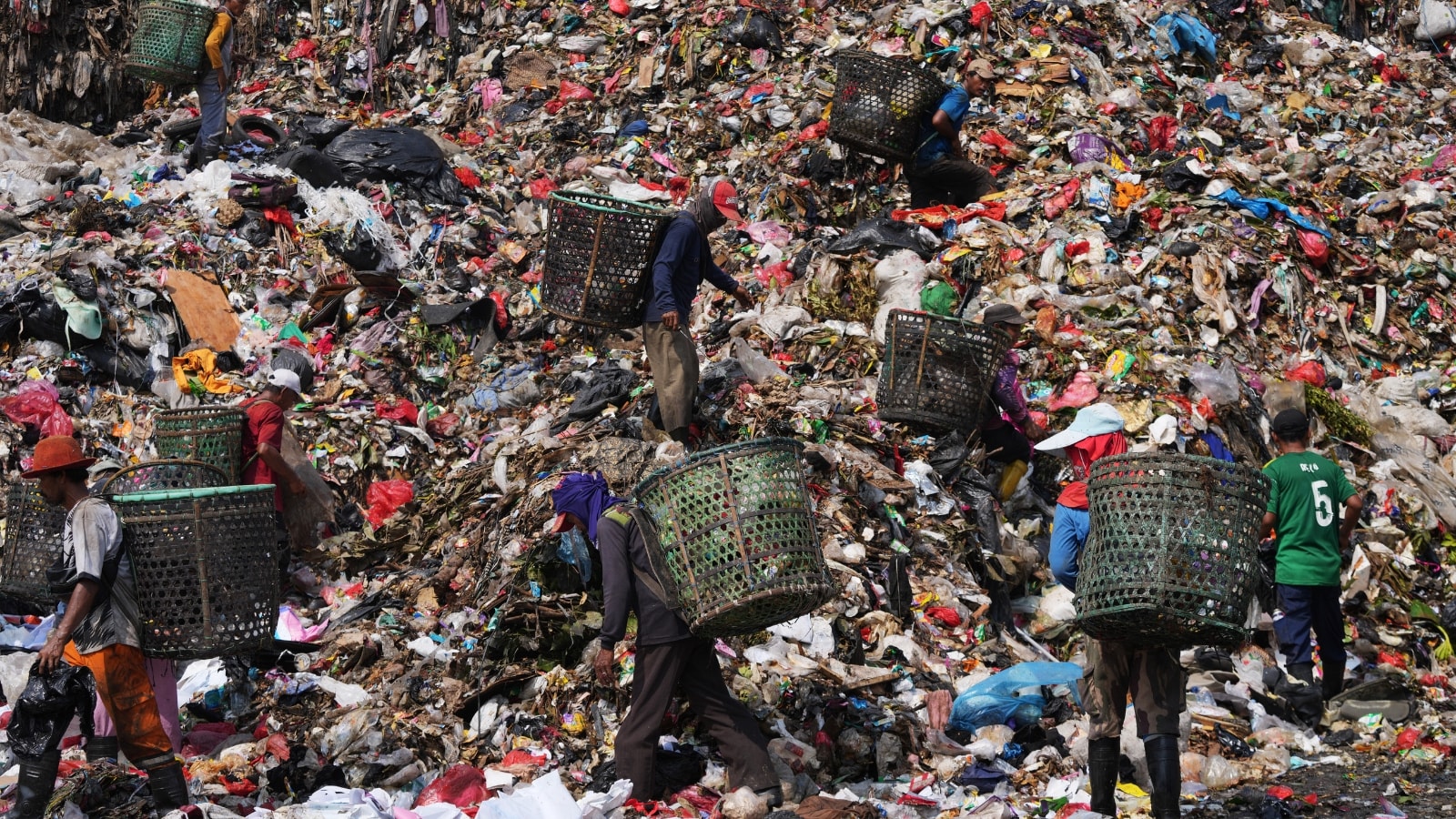
Mounting sixty meters into the West Java sky, the Bantar Gebang landfill looks less like a waste site and more like a grim, artificial mountain range. Every single day, roughly 7,500 tons of raw urban refuse arrives from Jakarta, piling onto a facility that passed its safety limits years ago. Worse still, satellite data from UCLA’s STOP Methane initiative flags Bantar Gebang as the world's second-largest landfill methane emitter, trailing only a site in Argentina.
When millions of tons of unsegregated organic material rot under crushing weight without oxygen, they generate staggering clouds of invisible greenhouse gases. Methane traps heat at a rate many times more destructive than carbon dioxide over the short term, fueling global temperature spikes. Indonesia's new overhaul plan aims to drag this massive dumping ground into compliance, but the road ahead is steep, messy, and deeply tied to the lives of thousands of informal workers.
The Anatomy of a Climate Time Bomb
Bantar Gebang has operated since 1989. It was originally designed to function as a controlled sanitary landfill equipped with gas extraction wells. Over decades of administrative shifts and ballooning urban populations, that original design broke down. Private-sector management contracts expired, funding fluctuated, and the facility drifted straight into unchecked open dumping.
Today, only two of the site's original dozen methane extraction wells function properly. The rest of the gas escapes freely into the atmosphere or gathers in explosive pockets beneath the garbage layers.
The consequences go far beyond climate metrics. In March, heavy rains triggered a catastrophic landslide at the facility that killed seven people, including truck drivers and informal waste pickers. It was a glaring wake-up call for national authorities. The carrying capacity of the 110-hectare site is completely exhausted.
Inside the Overhaul Strategy
The Indonesian government announced a sweeping national cleanup targeting open dumping at 343 out of 550 disposal sites across the country. For Bantar Gebang, the intervention means stopping raw open dumping and moving toward stricter containment.
Crews are actively covering exposed slopes with heavy tarps to suppress gas leaks and stabilize shifting earth. Officials estimate that blanketing the remaining open disposal areas will cost roughly 200 billion rupiah, which translates to about $12 million.
Beyond putting a lid on the trash, the policy forces a structural shift in what enters the gates. The facility is slated to gradually restrict incoming loads to non-recyclable and non-compostable items—such as certain diapers and difficult packaging—while households across the capital region face pressure to separate organic waste at the source.
The Human Cost on the Garbage Mountains
Any technological fix at Bantar Gebang collides with a massive social reality. More than 4,000 registered waste pickers scale the shifting trucks and excavators daily to pull out plastic bottles, cardboard, and discarded metals. These items sustain a local economy of traders, recycling stalls, and rental housing.
For workers who have spent decades earning a living on the trash heaps, sweeping regulatory changes trigger immediate anxiety about survival. While workers receive some basic protections through national social security programs, racing against heavy machinery every day remains hazardous.
Government officials argue that formalizing waste management will eventually transition these workers into safer, regulated jobs within recycling and composting facilities. Yet bridging the gap between dangerous informal labor and structured green jobs remains one of the toughest hurdles of the entire project.
Fixing the Root Cause
Capping a giant landfill stops immediate bleeding, but it doesn't solve Jakarta's trash addiction. Experts emphasize that long-term success depends heavily on upstream prevention. If households and commercial centers keep producing unsegregated waste faster than processing plants can absorb it, new mountains will simply rise elsewhere.
Indonesia’s ambitious climate goals—including a pledge to slash unconditional emissions significantly by 2030—hinge on whether this overhaul can successfully tame its worst methane offender. The tarp covers and extraction wells are just the first step in a decades-long cleanup process that will test the country's policy resolve to its absolute limits.