You can have the law completely on your side, hold a copy of a federal court ruling in your hand, and still get held down and shaved bald by prison guards who face zero personal financial accountability.
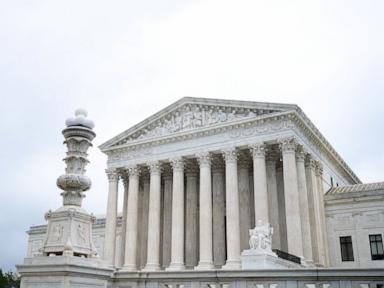
That is the reality after the Supreme Court ruled 6-3 along ideological lines in Landor v. Louisiana Department of Corrections. The conservative supermajority decided that an incarcerated Rastafarian man, Damon Landor, cannot sue individual prison guards for money damages after they forcibly cut off the dreadlocks he had grown for twenty years.
The facts of what happened to Landor in 2020 are not even up for debate. The state of Louisiana admitted wrongdoing. Lower courts explicitly condemned the guards' behavior. Yet, the highest court in the land just shut the door on the only real tool prisoners have to deter rogue officers from trampling on their civil rights.
If you think federal laws automatically protect religious liberties behind bars, you are wrong. Here is what really happened, why the court ruled the way it did, and what this means for the future of civil rights.
The Three Weeks That Erased Twenty Years of Faith
Damon Landor was serving a brief five-month sentence for drug possession in Louisiana. For the first four months, his religious rights were respected. He is a devout Rastafarian who takes the Nazarite Vow, a commitment to let his hair grow uncut as a primary physical manifestation of his faith. The previous facilities allowed him to wear his hair long or under a traditional rastacap.
Everything changed when he was transferred to the Raymond Laborde Correctional Center in Cottonport, Louisiana, to serve the final three weeks of his sentence.
Landor knew the facility’s reputation. He arrived armed with paperwork proving his religious accommodations, including a copy of a 2017 ruling from the 5th U.S. Circuit Court of Appeals stating that Louisiana’s policy of cutting Rastafarian hair violated federal law.
He handed the legal documents to an intake guard. The guard threw them straight into the trash.
When Landor could not instantly produce a letter from his sentencing judge to verify his religion, guards handcuffed him to a chair, pinned him down, and sheared his knee-length dreadlocks to the scalp. Landor later stated that the forced shaving felt akin to being raped.
The Spending Clause Loophole That Protects Abuse
Landor sued the warden and the individual guards under a federal statute passed by Congress in 2000 called the Religious Land Use and Institutionalized Persons Act (RLUIPA). The law explicitly says that institutions receiving federal funding cannot place a substantial burden on an inmate's religious exercise unless it is the least restrictive way to achieve a compelling government interest. If a prison breaks this rule, victims can sue for "appropriate relief."
Most normal people would assume "appropriate relief" means making the victim whole through financial damages, especially since you cannot un-shave someone's head. But Justice Neil Gorsuch, writing for the 6-3 majority, looked at the case through a purely contractual lens.
The majority's logic hinges on the Constitution’s Spending Clause. When Congress passes a law like RLUIPA, it is basically offering a contract to the states: We will give you federal cash for your prisons, but you must agree to protect religious rights.
Gorsuch argued that because the state of Louisiana accepted the money, the state is the party bound by the contract—not the individual guards.
"Under the Spending Clause, Congress's power to spend money does not include the power to regulate," Gorsuch wrote. "Spending Clause statutes can bind only those who voluntarily and knowingly undertake obligations by agreement with the federal government. That essential element is missing here."
Because the individual guards never signed a contract with the federal government, Gorsuch concluded they cannot be sued for money out of their own pockets. It is a striking contrast to how the court treats the Religious Freedom Restoration Act (RFRA)—a nearly identical law applying to federal officials, where the Supreme Court previously allowed inmates to sue FBI agents individually.
A Right Without a Remedy
The ruling exposes a massive double standard in how civil rights are enforced. Justice Ketanji Brown Jackson wrote a scathing dissent, joined by Justices Sonia Sotomayor and Elena Kagan, calling out the majority for turning civil rights laws into mere corporate transactions.
Jackson argued that the ruling leaves state prisoners entirely "remediless" when their rights are violated.
Think about how prison litigation actually works. By the time an inmate files a lawsuit, gathers evidence, and gets a court date, they have usually been released from prison. You cannot sue for an injunction to stop guards from cutting your hair if you are already walking free. Your locks are gone, and you are no longer in the facility. The only meaningful remedy left is monetary damages. By stripping away financial liability, the court has effectively taken the teeth out of the law.
As Jackson pointed out, if prison guards know they cannot be held personally liable for ignoring federal law, they have very little incentive to follow it. A piece of paper detailing an inmate's rights means nothing if the people holding the keys can toss it in the garbage with zero financial consequences.
The Next Steps for Religious Liberty Advocates
If you are a civil rights advocate, an attorney, or someone concerned about institutional accountability, relying on federal RLUIPA claims for damages against state actors is officially a dead end. To fight back against this gap in accountability, legal strategies must pivot immediately.
- Target State-Level Legislation: Advocates must lobby state legislatures to pass state-level versions of religious freedom restoration acts that explicitly allow for individual damages against state employees who violate religious liberties.
- Sue the Entities, Not the Individuals: Future litigation must focus heavily on establishing municipal or institutional liability by proving that the violations were part of an official policy or deeply ingrained custom, forcing the state entities themselves to pay up.
- Demand Contractual Indemnification Clauses: Civil rights groups should pressure state corrections departments to implement internal policies that strip guards of qualified immunity or state-sponsored legal defense if they intentionally violate clear federal religious protections.
The Supreme Court handed a major win to states worried about the financial liability of their workers, but it did so at the expense of human dignity and religious freedom. Without a direct financial threat to their wallets, rogue prison officials have been given a green light to ignore the faith of the people they guard.