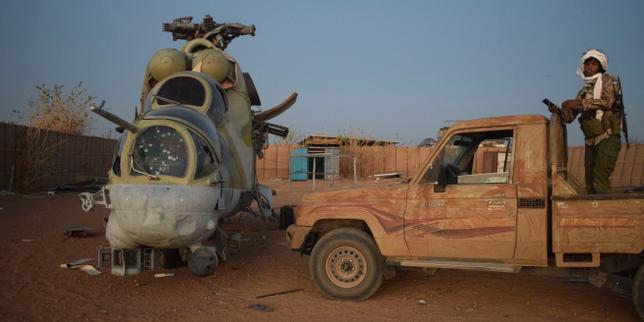
The narrative of a sovereign, secure Mali under military rule has officially collapsed. For years, General Assimi Goïta's junta promised that kicking out Western forces and embracing Russian state mercenaries would solve the country's security crisis. They told the public that the territory was being reconquered. They claimed the enemy was on the run.
The massive, coordinated offensives that kicked off on April 25, 2026, proved all of that was a lie.
What we're seeing right now in Mali isn't just another flare-up in a long-running insurgency. It's something much more dangerous. The al-Qaeda-linked jihadist group Jama'at Nusrat al-Islam wal-Muslimin (JNIM) and the Tuareg separatist coalition, now merged under the Azawad Liberation Front (FLA), have formed a pragmatic, tactical alliance. These two groups hate each other ideologically. They've fought bloody turf wars for a decade. Yet they managed to sync their watches and launch a devastating, multi-front campaign that brought the war directly to the junta’s doorstep in Bamako.
If you want to understand why West Africa is on the brink of a massive geopolitical shift, you have to look past the official propaganda coming out of the capital. The reality on the ground is stark, brutal, and rapidly evolving.
The Unlikely Marriage of Convenience
For years, counterinsurgency strategies in the Sahel relied on one basic assumption. Analysts assumed that jihadists and secular separatists would always keep each other in check. The Tuareg nationalists of the FLA want an independent state called Azawad in northern Mali. They are fundamentally secular. JNIM, on the other hand, wants a strict Islamic state spanning the entire region. They shouldn't get along.
But the Goïta regime made a critical blunder. By tearing up the 2015 Algiers Peace Accords in early 2024 and attempting to crush the northern rebels through sheer military force, the junta gave its two biggest enemies a common target.
This isn't an ideological merger. It's a highly sophisticated division of labor. JNIM brings deep asymmetric warfare capabilities, suicide vehicle-borne IEDs, armed drones, and an extensive network of rural fighters. The FLA brings intimate local intelligence, critical territorial access, and deep mobility corridors through the desert.
They realized they don't need to agree on what Mali looks like tomorrow to agree that the junta must fall today. By coordinating their logistics, they've forced the Malian army to fight a multi-front war it simply cannot afford.
Deconstructing the Coordinated Onslaught
The sheer scale of the April attacks caught everyone off guard. This wasn't a hit-and-run operation in a remote border village. It was a synchronized strike across the entire country, hitting northern, central, and southern zones simultaneously.
The strategy was designed to cause maximum security stress on a stretched military. In the north, the FLA led the charge, recapturing the highly symbolic city of Kidal and forcing government troops to lock themselves inside their own compounds in Gao. Simultaneously, JNIM hit the southern and central sectors.
The blow to the regime's inner circle was catastrophic. The offensive penetrated Kati, the heavily fortified garrison town just outside Bamako that serves as the military's actual nerve center and the personal residence of Goïta himself. During the chaos, Defense Minister Sadio Camara was killed. Military intelligence chief Modibo Koné was severely injured.
Think about that for a second. The most heavily guarded individuals in the country were hit inside their own military sanctuary. Rumors are swirling through Bamako that the attackers had high-level accomplices within the military apparatus. Whether that's true or not doesn't even matter. The psychological damage is already done. The regime can't even protect its own leadership, let alone the civilian population.
Economic Strangulation is Doing the Heavy Lifting
While the spectacular military strikes get the headlines, the real damage to the junta is happening through economic warfare. JNIM has shifted its strategy from purely kinetic attacks to systematic economic blockades, and it's working flawlessly.
Back in late 2025, JNIM imposed a strict fuel and goods blockade on Bamako. They targeted commercial transport routes and systematically blew up fuel tanker convoys trying to reach government-held areas. They brought the capital to a near-standstill.
The junta tried to counter this by organizing massive, military-escorted fuel truck convoys and negotiating short-term, localized truces. It didn't fix the underlying issue. The capital is still plagued by regular, rolling power outages and intense fuel shortages. Inflation is spiking.
Mali relies heavily on its gold mining sector to fund its state operations and pay its foreign security bills. But mining infrastructure requires stable transport corridors to move supplies and fuel. By choking off the roads leading into Bamako and isolating key regional hubs like Mopti and Sévaré, the rebel alliance is cutting the financial veins of the state.
The Collapse of the Russian Security Umbrella
When the junta forced French forces out in 2022 and kicked out the UN peacekeeping mission (MINUSMA) at the end of 2023, they bet everything on Moscow. They traded Western partnerships for Russian mercenaries. For a while, the Wagner Group—which transitioned into the Africa Corps under the direct control of the Russian Ministry of Defense—provided the junta with the brutal kinetic power they wanted.
But Russia's African project is hitting its limits. The Africa Corps lacks the logistics, the air support, and the deep regional knowledge needed to fight a hybrid, decentralized insurgency.
Reports from the ground indicate that foreign paramilitaries have quietly abandoned several isolated northern garrisons. They're pulling back to focus almost exclusively on safeguarding the capital and preserving the presidency. Algeria, watching the chaos from the northern border, has even stepped back into its role as a regional mediator, reportedly helping facilitate the withdrawal of these foreign forces from volatile zones to avoid a total regional contagion.
The Alliance of Sahel States (AES), a pact formed by the juntas of Mali, Burkina Faso, and Niger after they broke away from ECOWAS, has also proven to be a paper tiger. When Bamako was burning, there was no coordinated military deployment from Niger or Burkina Faso. Every regime is too busy fighting for its own survival at home.
The Direct Impact on the Ground
If you talk to anyone living in Bamako right now, the mood is tense. The government has imposed strict curfews and flooded the streets with roadblocks and heavy patrols. They're trying desperately to project an image of normalcy. They want people to believe the army killed hundreds of terrorists and regained full control.
But the population isn't buying it anymore. When you can hear heavy gunfire and drone strikes from the international airport while you're eating breakfast, the propaganda loses its power.
The junta is currently backed into a corner. They have a few choices, and all of them are bad. They can try to drive a wedge between the FLA and JNIM by offering the Tuareg separatists a political deal. But the FLA won't accept anything less than a return to the Algiers Accords, which would require the junta to publicly swallow its pride and admit its entire northern strategy was a failure. Alternatively, they can keep relying on Russia, watch their economy crumble, and risk another internal military coup from lower-ranking officers tired of dying in an unwinnable war.
Practical Next Steps for Regional Observers and Security Analysts
If you are tracking the security situation in West Africa, stop looking at map lines showing government control. They don't reflect the reality of fluid, asymmetric warfare.
First, watch the supply corridors between Abidjan, San Pedro, and Bamako. The survival of the Malian state depends entirely on whether it can keep these commercial arteries open against JNIM attacks. If the fuel blockade tightens again, the regime's urban support base will evaporate.
Second, monitor the mining operations in western and southern Mali. If jihadist groups successfully expand their rural administrative control into the gold-producing regions, the junta’s primary source of hard currency will vanish, making it impossible to pay for foreign military support.
The illusion of control has shattered. The alliance between the FLA and JNIM has rewritten the rules of the conflict, and the regime in Bamako is running out of time to figure out the countermove.


