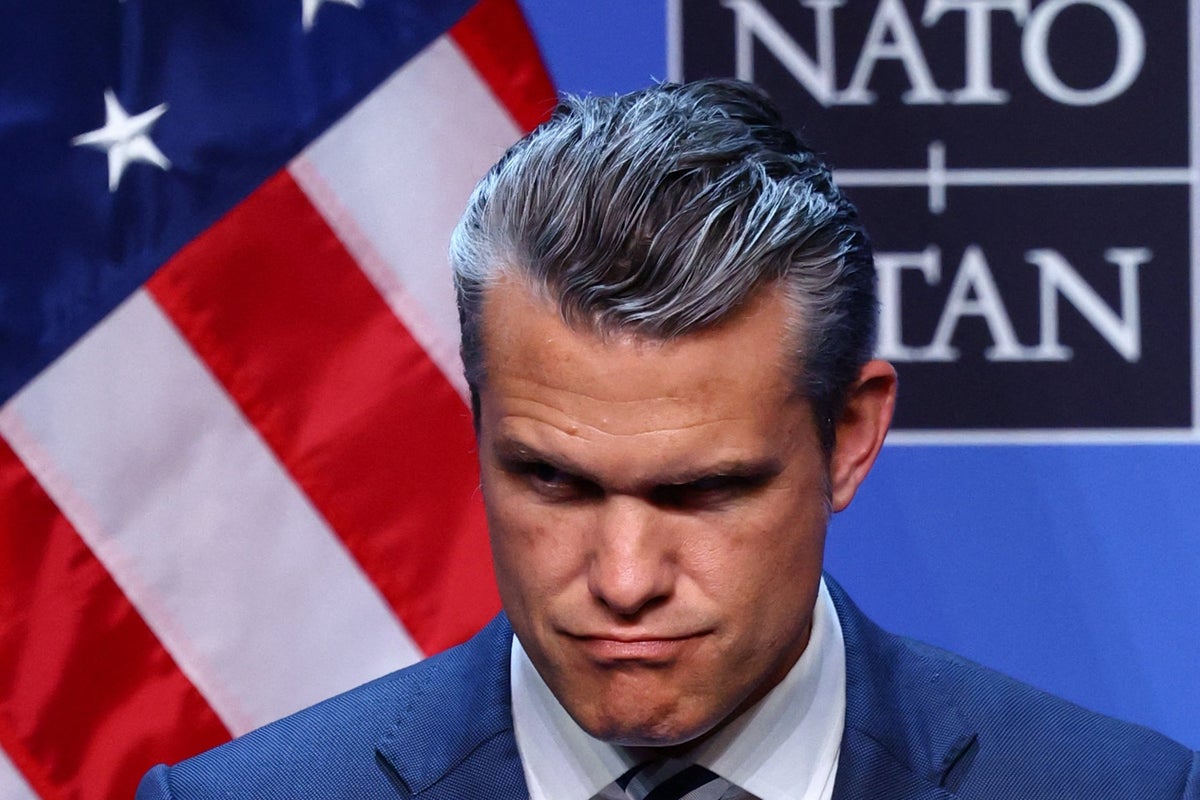
Defense Secretary Pete Hegseth stepped aboard a Navy ship in June 2026 expecting to see a reflection of his idealized, laser-focused warrior ethos. Instead, he saw facial hair. Multiple sailors were walking the decks with beards, apparently unbothered by the Pentagon's top-down crusade against facial hair.
It didn't go over well.
Reports indicate that Hegseth left the vessel fuming, sparking a flurry of high-level Pentagon meetings. Subordinates were quickly reminded that the boss is tracking this issue down to the individual sailor. Political appointees are turning the screws to accelerate the timeline for a clean-shaven force. But this isn't just about a cabinet secretary having a bad day at sea. It highlights a massive disconnect between political leadership obsessed with corporate-style uniformity and the practical realities of active-duty sailors.
The Razor-Thin Line of Military Discipline
The Pentagon claims this is a matter of safety and lethality. The core argument rests on an unreleased Navy study suggesting facial hair breaks the airtight seal required for emergency breathing masks and gas apparatus. On paper, that sounds reasonable. If you're fighting a fire in a hull or facing a chemical threat, you want your equipment to work perfectly.
Yet, the actual implementation of the policy tells a different story. In September 2025, Hegseth explicitly laid down the gauntlet to a room full of generals and admirals, declaring that the era of the "beardo" was officially dead. The Navy recently operationalized that rhetoric into a rigid directive: sailors with medical shaving waivers get exactly 12 months of treatment to conform, or they face administrative separation. They get kicked out.
If safety were the sole metric, the policy would accommodate the complex medical issues surrounding shaving. Instead, it reads like a forced corporate rebranding disguised as combat readiness.
The Human Cost of the Shaving Mandate
The primary target of these policy shifts isn't lazy sailors avoiding a razor. It is personnel dealing with pseudofolliculitis barbae (PFB), a painful, chronic inflammatory skin condition where tightly curled facial hair grows back into the skin after shaving, causing severe razor bumps, infection, and scarring.
Data shows that PFB disproportionately impacts Black men, affecting an estimated 45% to 83% of Black service members. Under the current rules, a commanding officer can grant temporary 90-day waivers, up to four consecutive times, while a sailor undergoes medical treatment. If the creams, topicals, or laser therapies fail after one year, the condition is deemed "unmanageable."
The reward for a year of failed medical treatment? Getting drummed out of the service for failing to meet grooming standards.
Lawmakers and military advocates have slammed the policy as discriminatory and short-sighted. In a military environment already plagued by recruiting shortages, discharging experienced technicians, engineers, and operators over a treatable skin condition defies logic.
Uniformity vs. Reality
The defense leadership's hyper-fixation on the smooth-shaven "warrior look" ignores centuries of military history where actual combat effectiveness had zero correlation with facial hair. Special operations units are still allowed to request "modified standards" to grow beards when blending into foreign cultural environments, though even they are told to shave if a chemical or nuclear threat is imminent.
What we're seeing is a policy shift driven by optics. Hegseth has tied the clean-shaven look directly to physical fitness and discipline, often staging highly publicized workouts with troops while simultaneously railing against "fat generals" and sloppy standards.
But a disciplined force isn't built by micromanaging the follicles of sailors who are already performing complex, high-stress jobs at sea. Forcing high-performing personnel out of the Navy over medical realities doesn't make the military more lethal. It just makes it smaller, less experienced, and increasingly frustrated by leadership priorities.
The military faces major global challenges and real deployment strain. Expending political capital and command energy to hunt down shaving waivers aboard warships signals an organization confusing superficial uniformity with actual combat capability.
To stay ahead of changing military regulations and career impacts, service members currently holding a medical profile should immediately schedule a review with their primary care manager to document treatment steps before the 12-month clock runs out.