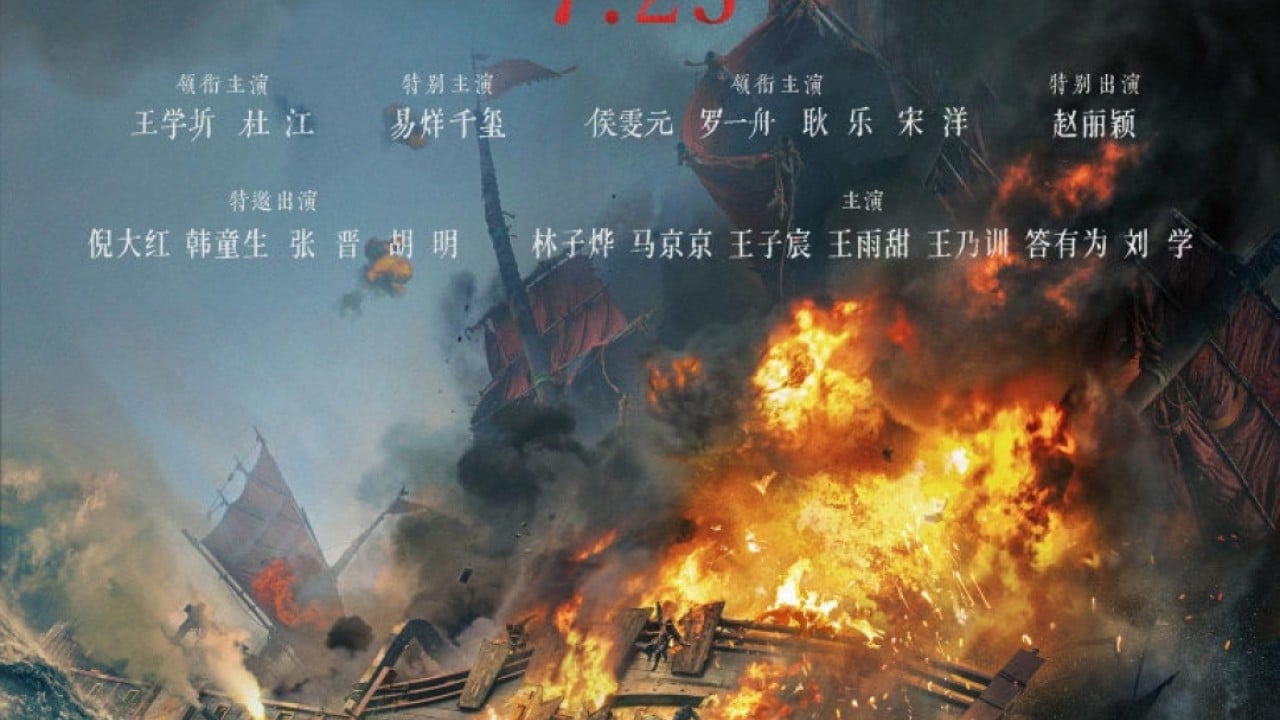
You would think a heavily backed patriotic film about taking back Taiwan would sail smoothly through domestic theaters. It didn't.
When Beijing lined up state resources behind the historical epic The Battle of Penghu, nobody expected the fierce resistance to come from online nationalists at home. Yet, as release dates approached and ticketing windows stalled, the project became a massive headache for state censors. Why? Because trying to weaponize 17th-century history for modern political messaging is a dangerous game.
The Historical Trap Behind the Screen
The movie centers on a 1683 naval campaign. Admiral Shi Lang, acting under the Qing dynasty's Kangxi Emperor, crushed the Ming-Zheng regime at the Battle of Penghu and dragged Taiwan into the imperial fold. The political parallel was hammered home aggressively in early press releases, positioning the historical conquest as a direct blueprint for modern cross-strait goals.
Here is where the strategy imploded.
Modern internet culture in China isn't a monolith. Over the past few years, a vocal faction of Han Chinese nationalists—often referred to online as Huanghan—has grown increasingly assertive. These groups look back at the Ming dynasty as the absolute peak of authentic Han civilization. They view the Manchu-founded Qing dynasty through a cynical lens, categorizing them as foreign conquerors rather than rightful rulers.
When a state-backed blockbuster asks millions of patriotic citizens to cheer wildly for a Manchu-led fleet destroying a Han Chinese regime in Taiwan, it triggers a massive ideological short circuit.
When Propaganda Collides With Domestic Factions
The backlash caught authorities off guard. Instead of rallying the public around a neat narrative of territorial integrity, the film opened old ethnic wounds.
Comment sections erupted with debates over Shi Lang's legacy. In traditional Chinese historical moral codes, Shi Lang is often tagged as a turncoat or a traitor for switching allegiance from the fallen Ming to the invading Qing. Glorifying a historical defector to push a modern political talking point rubbed thousands of digital purists the wrong way.
The state narrative relies heavily on the concept of a unified multi-ethnic state, weaving Manchus, Mongols, Tibetans, and Han into one shared historical tapestry without friction. But online nationalist factions reject that clean packaging when it glorifies the subjugation of native Han governance.
Censors scrambled to contain the bleeding. Major review platforms like Douban blocked user ratings entirely, and the film's official social media channels went completely dark. Theater managers reported that clear distribution guidelines vanished into thin air, leaving scheduled premieres hanging by a thread.
The Broader Cost of Forced Historical Parallels
This mess highlights a fundamental flaw in modern cultural messaging. When art is treated merely as a blunt instrument for immediate policy goals, historical nuances bite back.
Taiwanese history is messy, layered, and fiercely contested. Trying to flatten centuries of complex geopolitics into a two-hour action movie meant to influence cross-strait sentiment proved to be an uphill battle. If a project designed to celebrate unification ends up fracturing domestic support and forcing state media into defensive containment, the strategy needs an immediate rethink.
Ideological control is tough to maintain when the audience refuses to read the script the way the state intended.
Hit Taiwanese Film Under Fire for Taiwan, China Weibo Post
This video highlights how cultural productions and political labels across the strait routinely spark fierce online debates and nationalist scrutiny.
http://googleusercontent.com/youtube_content/1