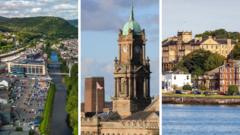
For decades, cultural investment in the UK felt like a zero-sum game. If you didn’t live in a major city—London, Manchester, Edinburgh—you were essentially watching the cultural budget pass you by. The "City of Culture" initiative helped shift that focus, but let’s be honest: it mostly benefited urban centers that already had some infrastructure to leverage.
Now, the government has launched the first-ever UK Town of Culture competition. Fifteen towns, from the Isle of Bute to Birkenhead, have just been handed £60,000 each to flesh out their bids for the 2028 title.
It’s easy to look at this as another government grant scheme destined for paperwork and empty promises. But look closer. This isn't just about throwing money at local theater groups or refurbishing a park. It's an admission that the "City of Culture" model was incomplete.
The Shift Toward Smaller Places
The list of fifteen contenders tells a story about what the government actually wants to fix. You’ve got three categories: small, medium, and large. This isn't accidental. By splitting the competition, they’ve removed the advantage that a place like Liverpool or Leeds might have had over a town like Lerwick or Strabane.
The shortlist is fascinating:
- Small towns: Ilfracombe, Isle of Bute, Lerwick, Sandown, Strabane, and Stockton Town Centre Ward.
- Medium towns: Corby, Great Yarmouth, Leith, Pontypridd, and Port Talbot.
- Large towns: Basildon, Birkenhead, Grimsby, and Rotherham.
These aren't tourist hotspots. Many of these places are synonymous with post-industrial decline or isolation. When you see names like Port Talbot or Grimsby on that list, you aren't looking at "culture" in the sense of a high-end art gallery opening in a posh district. You're looking at a desperate need to reclaim a narrative.
What The Money Actually Does
Let's cut through the official speak. The winner walks away with £3 million. The two runners-up grab £250,000. Is that enough to "regenerate" a town? No. It’s barely enough to run a decent festival series for six months.
If you think £3 million is a magic bullet for systemic economic failure, you’re mistaken. You can’t fix decades of under-investment with one year of theater performances. However, that’s not really the goal here. The real value is the "placemaking" effect.
When a town wins or even bids seriously for an award like this, it forces local authorities, grassroots artists, and private businesses to sit in a room together. They have to articulate a story about who they are. They have to decide what matters to them. That planning process often creates partnerships that last far longer than the grant money itself.
I’ve seen this happen in previous City of Culture cycles. The most successful places weren't the ones that spent the most; they were the ones that used the nomination to force a change in how the community viewed its own potential. If a town like Birkenhead uses this bid to force better communication between its youth arts groups and local government, that’s a win.
The Trap of Cultural Tourism
There’s a danger here, though. Towns often fall into the "look at us, we’re quirky" trap. They try to package their identity for tourists, hoping to drive foot traffic. That usually fails. Real culture isn't for tourists; it’s for the people who live there.
The best bids in this competition will be the ones that ignore the "visit us" angle and focus on "belong here." If the winning town spends its £3 million on a glossy festival meant to attract people from the next county over, they’ve wasted the opportunity. If they spend it on making sure a teenager in a marginalized neighborhood has access to a recording studio or a community theater space, they’ve hit the jackpot.
Successful bids will focus on accessibility. The criteria mentioned by the Department for Culture, Media and Sport are quite clear: they want to see how the town will design a program for everyone. That means breaking down the invisible barriers that stop certain demographics from participating in local arts.
How to Judge the Contenders
If you live in one of these towns, or just have an interest in how this plays out, don’t watch the glossy marketing videos. Look at the local partnerships. Who is involved in the bid?
If it’s just the council and a few paid consultants, it’s going to be a hollow effort. A strong bid requires:
- Grassroots involvement: Are local artists, not just established institutions, at the table?
- Long-term utility: Is the infrastructure being built (or upgraded) going to be used in 2030, or will it be packed away in storage once the judges leave?
- Internal pride: Does the bid actually reflect the reality of the town, or is it trying to hide the "ugly" parts?
The most compelling stories often come from the towns that own their struggles. I’d rather see a bid from a place that says, "We have these issues, and here is how we use our local music scene to address them," than a bid that pretends everything is perfect.
The Reality of Winning
The winner gets the title in 2028. We are currently in 2026. This isn't a quick fix. The process of getting to the final is a brutal test of organizational capability. Each of these fifteen towns received £60,000 to develop their bid, and that funding is intended to pay for the research and consultation needed to produce something credible.
The judging panel, chaired by Sir Phil Redmond, isn't going to be easily impressed by a PowerPoint presentation and a promise. They’ve seen the success of places like Hull and Bradford. They know exactly how these projects can go wrong—by becoming insular or failing to engage the wider public.
If you’re waiting to see who wins, keep an eye on the community engagement metrics coming out of these towns over the next six months. The town that gets the most people—not just the usual suspects—excited about their specific identity will likely take the prize.
This isn't about competing to be the "best" place in the UK. It’s about competing to be the best version of yourself. That’s a shift in mindset that every town in the country could stand to learn from, whether they’re on this shortlist or not. If your local council isn't talking about this, they're missing a free opportunity to start a conversation about what your town actually stands for.
Stop waiting for national funding to define your community. Start looking at what you have, who is creating it, and how you can support them today. That’s how you build a cultural legacy that lasts.