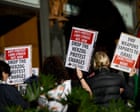
The Chris Minns Labor government just can't stop losing in court.
Freedom of information documents have exposed the true cost of the state's obsession with shutting down public dissent. New South Wales taxpayers are footing a rapidly growing bill—running deep into the hundreds of thousands of dollars—to pay for failed legal defences of anti-protest laws that top legal minds knew were doomed from the start.
It is a pattern of expensive, knee-jerk lawmaking. The government rushes draconian powers through parliament during a media storm, watches the police overreach, and then spends six figures of your money trying to defend the indefensible in the Court of Appeal.
Let's look at the actual numbers, because the breakdown of these legal fees shows exactly how much public money is being burned.
The Cost of Restricting Your Right to Assemble
According to the newly released documents, the state government blew $117,455.50 on a single legal battle trying to protect its Public Assembly Restriction Declaration (PARD) laws.
Those PARD powers were rushed through parliament in the early hours of Christmas Eve in December 2025 following the Bondi beach attack. The legislation gave the police commissioner the power to declare massive chunks of Sydney completely off-limits for protest marches for up to 90 days. Police immediately blanketed the city with these declarations, effectively shutting down the standard "Form 1" approval process for activist groups.
Three activist groups—the Blak Caucus, the Palestine Action Group, and Jews Against the Occupation '48—took the government to court in the landmark case Jarrett v State of New South Wales.
In April 2026, the Court of Appeal delivered a swift reality check. The full bench ruled that trying to ban protests under the vague guise of "social cohesion" or protecting the community from "upsetting" political speech was entirely illegitimate. The court struck down the laws for impermissibly burdening the implied constitutional freedom of political communication.
Because the government lost, they didn't just have to pay their own $117,000 bill. They were also ordered to pay the plaintiffs' legal costs. The final taxpayer bill for that single blunder is going to climb significantly higher once those costs are finalised.
A Chronically Broken Legal Strategy
The PARD disaster wasn't an isolated incident. It was the second time in just six months that the Minns government watched its anti-protest agenda get dismantled by a judge.
Late last year, the NSW Supreme Court struck down a separate law that gave police expanded powers to ban protests outside places of worship. The court found that law was also completely unconstitutional. The freedom of information documents reveal the government spent $96,400 on barristers and solicitors trying to save that one.
When you add the police department's separate legal bills to the mix, the financial bleeding gets worse.
NSW Police spent over $91,600 on external lawyers to fight a "Form 1" application by activists who wanted to march across the Sydney Harbour Bridge. Police lost that case too. They spent another $59,500 opposing a pro-Palestine march to the Opera House.
Altogether, the state has sunk at least $305,500 into fighting these high-profile court battles against activist groups, alongside roughly $87,000 on cases they managed to win. Keep in mind, the police figures don't even factor in the cost of using their own massive team of in-house corporate lawyers.
The Political Fallout Inside Labor
This isn't just an embarrassing financial headache for Premier Chris Minns; it's a massive political problem.
The government's heavy-handed approach has alienated its own base. Just last week, 56 local Labor branches passed motions ahead of the state conference demanding that these controversial anti-protest laws be reviewed or completely scrapped. The party's entire left faction has unified against the rules, openly arguing that the legislation actually increases tension and makes violence at rallies more likely.
The government thought they could look tough on crime by crushing street activism. Instead, they've managed to unite civil liberties lawyers, their own grassroots party members, and constitutional judges against them.
What Happens Next
If you're a resident of New South Wales or an organizer planning a public assembly, the legal landscape has fundamentally shifted back in your favor. The courts have made it clear that the government cannot use blanket bans to stop people from taking to the streets.
Here is what you need to keep in mind moving forward:
- The Form 1 System is Restored: The standard notification process under Part 4 of the Summary Offences Act is fully operational. Police cannot use post-Bondi emergency declarations to automatically reject your march.
- Watch the Move-On Orders: While blanket bans are gone, individual police officers still hold broad powers under LEPRA to issue move-on directions if they believe traffic is being blocked. Always know your rights, remain calm, and document any interactions.
- The Left Faction Push: Keep a close eye on the upcoming NSW Labor state conference. Grassroots pressure might force the government to formally repeal the remnants of these laws before the courts have to do it for them again.
The state government has spent the last year treating the constitution like a minor speed bump. Now that the bills are coming due, taxpayers are the ones left cleaning up the mess.