If you bought a flat in Pak Shek Kok expecting an MTR station anytime soon, you are probably kicking yourself right now. The government finally pulled back the curtain on the latest timeline for the proposed East Rail Line addition, and the reality is a tough pill to swallow. We are looking at 2033 before a single passenger boards a train here.
Construction will not even start until the second half of 2028. Let that sink in. A neighborhood that has been marketed for over a decade as a rising tech-hub residential haven is being left out in the cold for another seven years minimum.
This project was first dangled in front of the public by former Chief Executive Carrie Lam back in her 2021 Policy Address. Since then, the plan has been pushed back four separate times from its original mid-2024 target. The newly updated proposal, which heads to the Tai Po District Council, alters more than just the timeline. It completely reshapes the physical layout, the station's exact location, and the financial structure of the entire development.
If you live in the area, work at the Science Park, or are eyeing the local real estate market, you need to understand what is actually happening behind the bureaucratic press releases. The standard corporate speak from the MTR Corporation and the Development Bureau hides a messy story of engineering headaches, shifting property strategies, and a massive transport compromise.
The New Shift South and Why It Matters
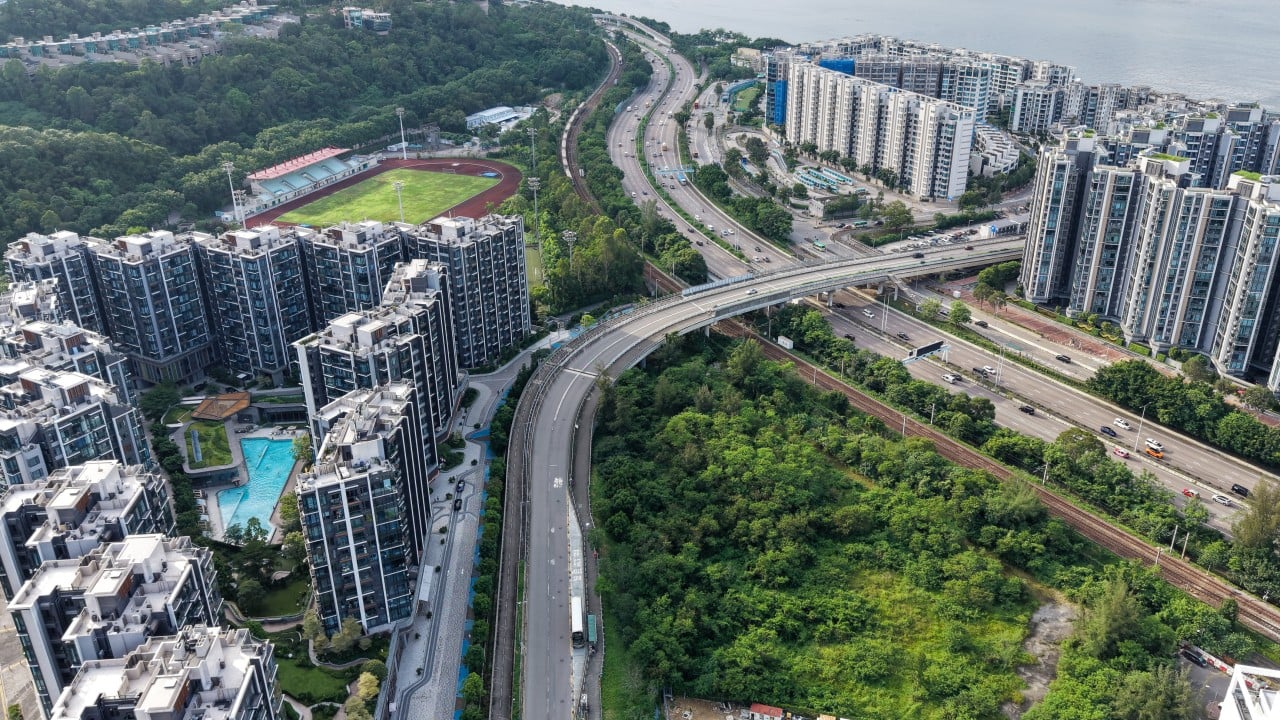
The original plan placed the station squarely on the site of the Education University of Hong Kong Sports Centre. The updated blueprint throws that out. Instead, the government wants to construct a two-storey, open-air station shifted further south, bringing it closer to the Chinese University of Hong Kong and the Science Park.
Specifically, sources point to a location near the CUHK Lo Kwee-Seong Integrated Biomedical Sciences Building, right across the road from the Solaria private residential estate.
This shift is a double-edged sword. On one hand, it serves the 20,000-plus people working at the Science Park much better than the old site did. Right now, if you work at the Science Park, your daily commute is a regular exercise in frustration. You are either squeezed onto the 272K bus or mini-buses to University Station, or you face a sweaty 30-minute walk along the waterfront. Bringing the station closer to the actual offices makes sense from an employment standpoint.
On the other hand, the new location changes the geometry of the neighborhood. An elevated footbridge will stretch across the Tolo Highway to connect the station to Chong San Road and Innovation Road. It is going to be a massive piece of concrete infrastructure dominating the local environment.
The station itself will be an at-grade facility, roughly 250 meters long and 25 meters wide. Unlike standard modern MTR stations, this one will not have a massive shopping mall or high-rise residential towers sitting directly on top of it. It is a bare-bones transport hub designed to move people, not a massive air-conditioned mega-structure.
The Station First Financing Shell Game
Hong Kong loves its Rail plus Property development strategy. Usually, the MTR builds a station, builds high-rises on top, sells them for billions, and uses that money to cover the rail construction costs. Pak Shek Kok is breaking that model because of a station first, residential development later approach.
Because they cannot build directly on top of the open-air station, the government is using a complicated land-swap mechanism to compensate the MTR Corporation for the massive construction costs.
First, the existing Education University Sports Centre must be completely demolished and moved. The government is relocating it to a plot of land at Tung Tsz on Ting Kok Road, which sits near the university's main campus in Tai Po. The land resumption and clearance for that sports center will start in 2028, with completion aimed for 2031.
Once the old sports center site is cleared, that land will be handed over to the MTR Corporation alongside a second, separate plot of land way over in Ma On Shan. The MTR will then build private housing developments on these two pieces of land to make its money back.
This timeline is where things get incredibly messy for the local community. The property development work on these sites is scheduled to kick off in phases from 2031 at the earliest. This means that while the station is being built between 2028 and 2033, the surrounding area will remain a massive, active construction zone well into the 2030s. If you bought a home here looking for peace and quiet by the sea, you are looking at another decade of dust, trucks, and drilling noises.
The Engineering Nightmare on the Tracks
Why does it take five years to build a simple two-storey, open-air station? The answer lies in the tracks themselves.
The MTR is not building a new line from scratch out in the middle of nowhere. They are trying to insert a brand new station onto an active, heavily utilized running track. The East Rail Line is the absolute backbone of transit between the mainland border at Lo Wu and Lok Ma Chau all the way down to Admiralty. You cannot just shut down the line for a year to lay concrete.
Most of the heavy engineering work can only happen during the golden two or three hours of the night when trains are not running. Crew sizes are restricted, safety protocols are agonizingly slow, and everything must be cleared out before the first morning train rolls through. Every minor mistake could paralyze the commute for hundreds of thousands of people across the city the next morning.
Even after the station opens, it brings a permanent structural cost to the rest of the East Rail Line network. Adding a stop between University Station and Tai Po Market adds roughly 84 seconds, or about 1.4 minutes, to the total travel time for every single train on the line.
For the residents of Pak Shek Kok, the station will trim about 20 minutes off their journey to Kowloon or Hong Kong Island. But for commuters sitting on trains coming down from Fanling, Sheung Shui, or New Territories North, it is a daily tax on their time.
Then there is the capacity problem. Ever since the East Rail Line shifted from 12-car trains to 9-car trains to accommodate the cross-harbor extension, peak hour trains have been incredibly cramped. The Development Bureau claims that the current capacity of the East Rail Line is plenty to handle the surge of new passengers from Pak Shek Kok. They say the MTR can just increase train frequencies if needed. Anyone who routinely rides the East Rail Line at 8:30 AM will tell you that increasing frequency on an already packed line is much easier said than done.
The Brutal Reality for Real Estate and Rents
Let's talk about the property market because Pak Shek Kok has long been a speculative playground. Developments like Solaria, Mayfair By The Sea, and Silicon Hill were heavily sold on the promise of future MTR connectivity.
The 2033 timeline kills any short-to-medium-term speculative premium. If you bought into the area recently hoping for a quick bump in property value when the station opens, your capital is locked up in a slow-yielding asset for a long time.
Rental yields in the area will likely stay depressed. Tenants are smart. They will not pay premium rents for a neighborhood that still requires a feeder bus to get to a train station, especially when they can hear the hum of highway construction across the street.
The "station first" policy also means that a massive influx of new private residential supply will hit the market from the old sports center site right around the time the station actually opens. When you have a sudden surge of hundreds of new apartments hitting a concentrated geographic zone, it creates intense competition among landlords.
However, it is not all doom and gloom if you take a genuinely long-term view. The shift closer to the Science Park cements the neighborhood as a genuine employment ecosystem. It stops being just a commuter town for Hong Kong Island and becomes a structural part of the city's technology ambitions. But you have to be willing to wait out the decade.
Your Immediate Next Steps
If you are a stakeholder in Pak Shek Kok, stop waiting for a miracle and adapt your strategy to the 2033 reality.
- For Existing Homeowners: Accept that your property value is tied to the current bus and minibus infrastructure for the foreseeable future. Do not plan your finances around a major capital gains exit before the mid-2030s. If you are sensitive to construction noise, look closely at the upcoming work zones near Solaria and prepare to invest in high-quality double-glazed windows.
- For Prospective Buyers: Use this multi-year delay as a massive bargaining chip. Sellers who are desperate to exit because they can't wait until 2033 will be forced to slash prices. Only buy if you can get a steep discount that reflects a decade-long transit deficit.
- For Tech Workers and Renters: Do not pay inflated rents based on future promises. Demand prices that match the reality of riding the 272K bus every morning. Look for long-term leases that lock in lower rates before the construction phase begins to wrap up in the early 2030s.
The government and the MTR will keep putting a positive spin on this project during the upcoming district council consultations. But a station on paper does not move human beings. Until 2033, Pak Shek Kok remains a driving and busing neighborhood, and everyone invested there needs to play the long game.