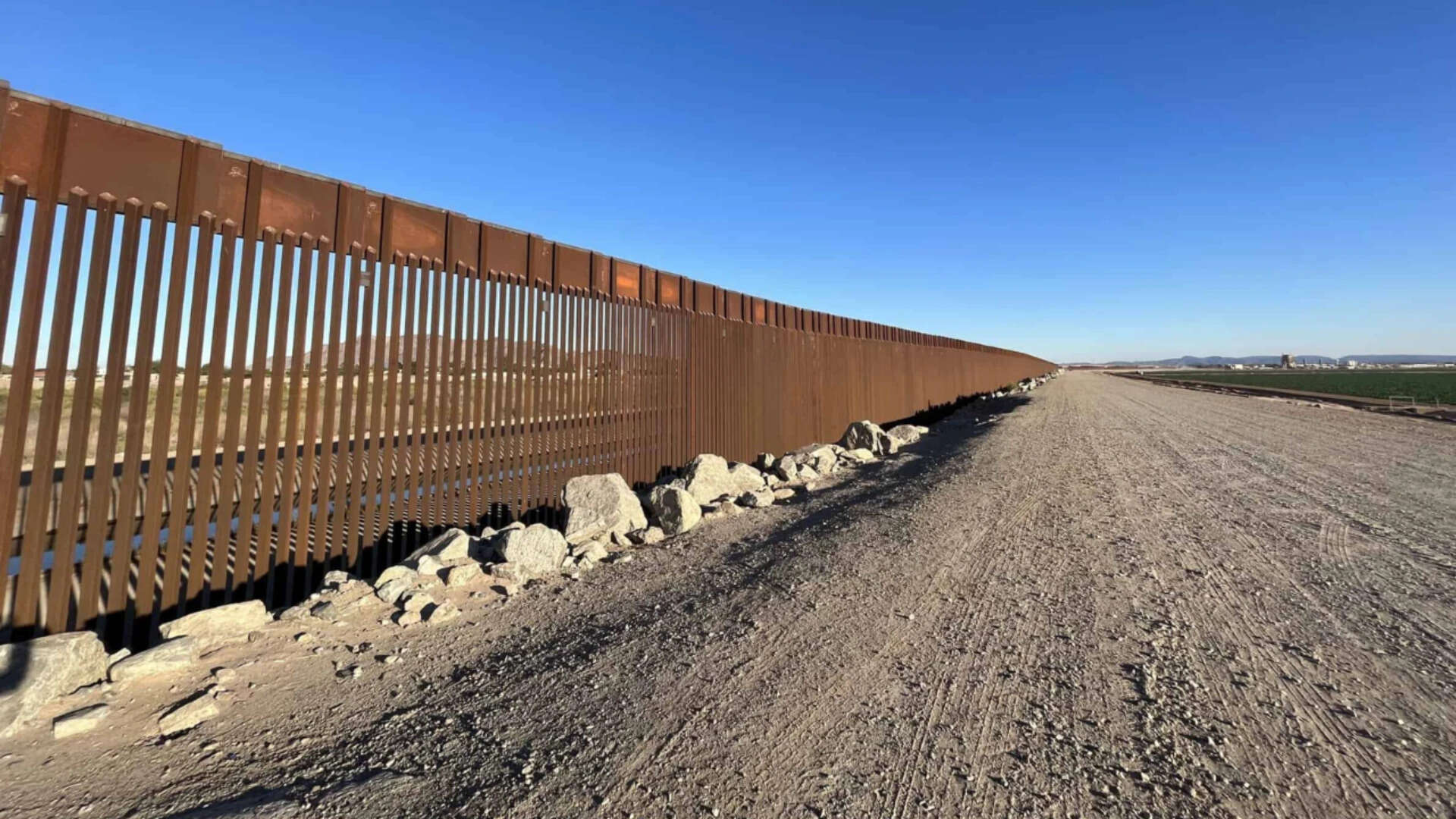
The Supreme Court just fundamentally reshaped how the United States handles people fleeing violence and persecution. If you think the current border debate is only about razor wire or mass deportations, you're missing the quiet legal earthquake that just happened in Washington.
In a major 6-3 decision, the high court ruled that the federal government can legally turn away asylum seekers before they ever step foot on American soil. It’s a massive victory for the Trump administration. It also completely flips a century of immigration practice on its head.
Most news coverage misses the core reality of what this actually changes. This isn't a new law passed by Congress. It's a redefinition of what it means to arrive at the United States.
If you're standing on an international bridge waiting your turn, do you have rights under American law? The Supreme Court just gave a resounding answer. No, you don't.
The New Border Reality Created by the Supreme Court
The case, Mullin v. Al Otro Lado, centered on a simple but devastatingly consequential question. Does the U.S. government have a legal duty to inspect and process people who show up at official ports of entry asking for safety?
For decades, human rights groups and international bodies assumed the answer was yes. Under federal law, anyone who "arrives in" the United States has the right to apply for asylum. They must be screened to see if they face credible fear back home.
But the conservative majority split a very specific linguistic hair. Writing for the majority, Justice Samuel Alito made a sharp distinction between arriving at the border and arriving in the country.
"A guest does not arrive in a house when he knocks on the front door," Alito wrote.
Because of that logic, federal border agents can physically block people on the Mexican side of an entry point. They can tell them to wait indefinitely. They can turn them back into dangerous border cities. And they can do all of this without giving them an asylum interview or checking if they'll be killed back home.
This means the United States has effectively built a legal wall right at the threshold of its official gates. It's a complete shift in policy. It radically alters the mechanics of seeking refuge.
How We Got Here from Obama to Trump
To understand why this ruling matters so much right now, you have to look at the history of a practice called metering. It didn't start with Donald Trump. It actually started under the Obama administration back in 2016.
Large groups of Haitian migrants started showing up at the San Ysidro port of entry in San Diego. The administration claimed the holding facilities were full. Officers started telling people to wait in Mexico. They gave out numbers or put names in informal notebooks.
When Trump took office during his first term, his administration took this strategy and turned it into a standardized tool. Metering became the norm across the entire southern border. Thousands of people ended up stuck in tent cities in dangerous Mexican border towns like Matamoros and Tijuana.
A coalition of legal advocates, led by the organization Al Otro Lado, sued the government in 2017. They argued that blocking people at ports of entry violated the Immigration and Nationality Act. Federal courts repeatedly agreed with the advocates. Judges in California and the Ninth Circuit Court of Appeals ruled that the government had a clear duty to process these individuals.
The Biden administration eventually ended the formal metering policy in 2021. But the legal battle kept grinding through the courts. When Trump returned to the White House, his Justice Department aggressively pushed the Supreme Court to take up the case and overturn those lower court victories.
They got exactly what they wanted. The high court's ruling completely wipes away those earlier legal victories for migrant advocates. It gives the executive branch a blank check to bring back or expand turn-back policies whenever it feels the border is too crowded.
The Legal Hair Splitting That Changed Everything
The entire decision hinges on a single geographic reality. Where exactly does a person's legal protection begin?
The three liberal justices on the court issued a fierce 35-page dissent. Justice Sonia Sotomayor didn't mince words. She accused the majority of blessing an executive power grab that completely ignores what Congress intended when it passed the Refugee Act of 1980.
Sotomayor pointed out that a port of entry is literally designed to receive people. Turning them away when they're standing right at the line defeats the whole purpose of having an orderly system. She argued that the majority's ruling allows immigration officials to ignore the law even if they have plenty of open space, plenty of trained officers, and even if the person standing in front of them faces certain death if sent back.
She even compared the practice to the historical tragedy of the MS St. Louis. That was the ocean liner filled with Jewish refugees that the United States turned away right before World War II.
But the majority wasn't swayed by the humanitarian argument. They stuck strictly to the text. If you haven't crossed the physical boundary line into U.S. territory, you aren't legally here. If you aren't legally here, the U.S. Constitution and federal immigration laws simply do not apply to you.
Why This Explodes the Concept of Asylum
The practical consequences of this decision are massive. It creates an instantly bizarre set of incentives for people trying to reach safety.
Think about it from the perspective of an asylum seeker. If you go to an official port of entry and wait in line like the rules say you should, border agents can now legally tell you to go away. They can keep you waiting in Mexico for months or years. You have zero legal recourse. You can't sue them. You can't demand a hearing.
But what happens if you bypass the port of entry entirely? What if you cross the river or hop the fence illegally? The moment your feet touch U.S. soil, you are physically in the United States. Under the letter of the law, you now have the right to be processed and screened for asylum, even if you entered unlawfully.
Advocates argue this creates a dangerous incentive structure. It discourages people from using the official, orderly channels. It practically forces desperate families to turn to human smugglers and make dangerous crossings through the Sonoran desert or across the currents of the Rio Grande.
The majority opinion dismissed these concerns as overblown. But anyone who has spent time on the ground at the border knows how these dynamics play out in reality. Desperation doesn't disappear just because a court in Washington changes a definition. It just moves elsewhere.
The Double Blow to Immigrant Communities
This ruling didn't happen in a vacuum. On the exact same day, the Supreme Court handed down a second major immigration decision. It was another 6-3 split.
In Mullin v. Doe, the court ruled that the Trump administration can legally end Temporary Protected Status for roughly 350,000 Haitians and several thousand Syrians. These are people who have been living and working legally in the United States for years because their home countries are torn apart by war, gang violence, or environmental disasters.
Just like the asylum case, the conservative majority ruled that the courts do not have the power to review the Department of Homeland Security's decisions on these matters. It completely insulates the executive branch from judicial oversight.
The political reality here is undeniable. The Supreme Court has systematically stripped away the legal tools that civil rights lawyers have used for a decade to block hardline immigration policies. The courts are no longer a shield for migrants.
What Happens Next on the Southern Border
If you want to know what happens tomorrow, look at how the administration is reacting. The Department of Homeland Security applauded the ruling immediately. They're calling it a critical tool for securing the border.
We aren't seeing massive crowds at the international bridges right this second. Encounters have been lower recently due to other administrative restrictions. But this ruling gives the government a permanent green light to implement sweeping "metering" policies the moment numbers start to rise again.
Here is the direct advice for anyone watching this space or working with migrant populations.
First, stop relying on the courts to fix immigration policy. The legal avenue for challenging border turn-backs is officially dead. The Supreme Court made it clear that immigration policy belongs to the president and Congress, not federal judges.
Second, the focus must shift to legislative action. If advocates want to guarantee that people arriving at ports of entry are processed, they have to convince Congress to explicitly rewrite the text of the law to include those standing at the border. Given the current political gridlock in Washington, that's a massive uphill battle.
Third, expect increased pressure on Mexican border infrastructure. If the U.S. restarts widespread turn-backs, cities like Tijuana, Ciudad Juárez, and Reynosa will bear the brunt. Local shelters, resources, and security forces in Mexico will face an immediate strain as thousands of people find themselves trapped in legal limbo just inches away from American soil.
The gate is officially closed, and the lock is legal.