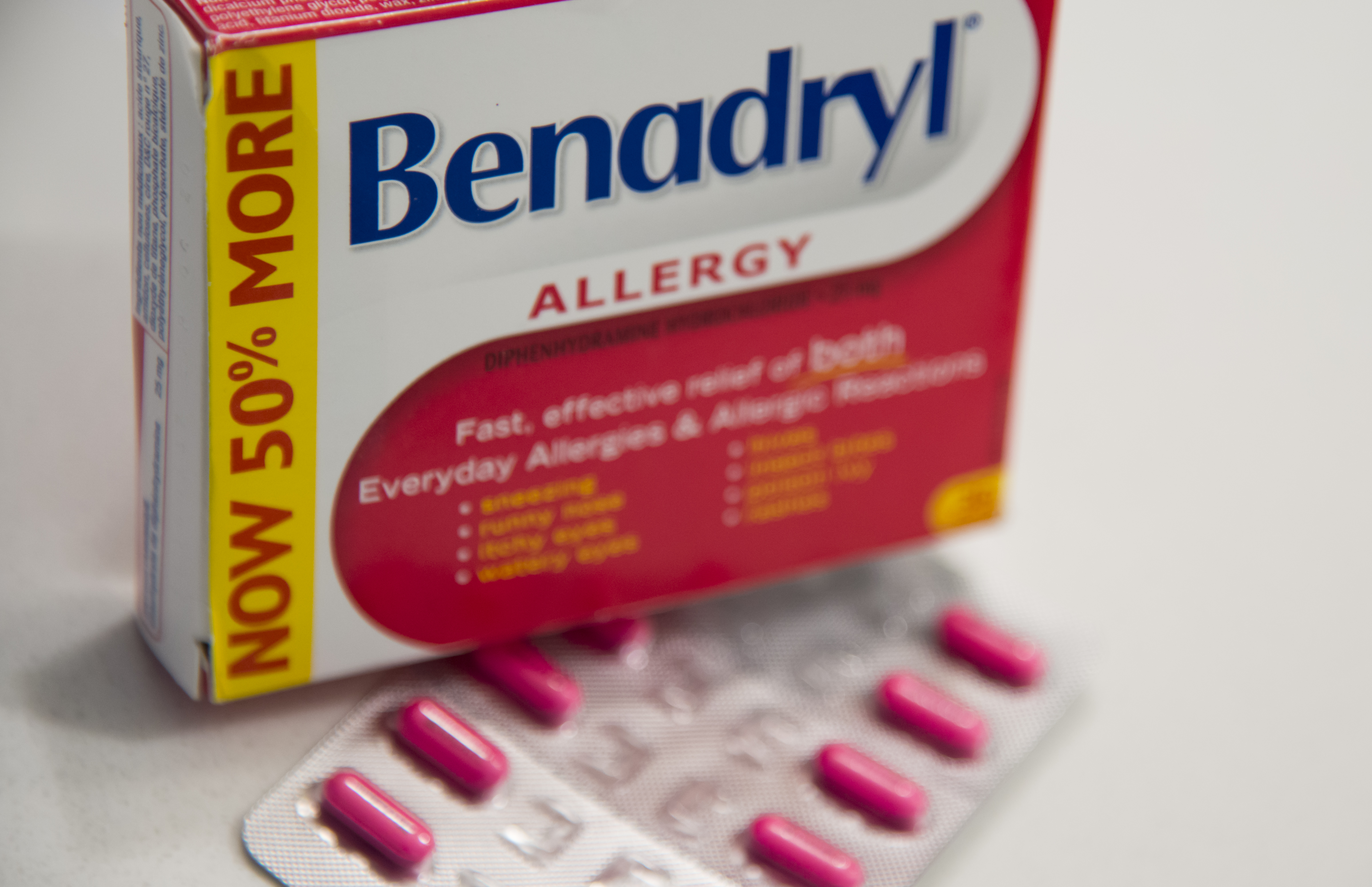
You walk into a local pharmacy, grab a pink box of Benadryl from an open shelf, and pay at the front cash register without talking to a soul. It's a completely normal routine for millions of Canadians dealing with seasonal allergies or sudden hives.
But that easy access is about to change in Quebec.
The provincial government is pushing forward with a draft regulation published in the Gazette officielle du Québec to restrict how you buy medications containing diphenhydramine. If passed, these over-the-counter allergy pills will vanish from open retail shelves. They're heading straight behind the pharmacist's counter.
You won't need a prescription to buy them, but you will have to look a pharmacist in the eye, explain why you need them, and have the sale logged directly into your personal medical file.
This move didn't happen in a vacuum. It's a direct response to a tragic wake-up call involving an 18-year-old who died from acute diphenhydramine poisoning in his home in St-Mathias-sur-Richelieu.
The Uncontrolled Danger of a Household Staple
Most people think over-the-counter means completely safe. It doesn't.
On the morning of December 11, 2023, a mother found her 18-year-old son unconscious in his bed. He was gone. The toxicological analysis later revealed a lethal concentration of diphenhydramine in his blood. His bedroom contained empty jars and blister packs of the common allergy drug.
Quebec coroner Vincent Denault led the investigation into the young man's death. His subsequent report raised serious alarms about how easily anyone can purchase massive quantities of a potentially lethal substance without a single guardrail.
Denault pointed out a glaring contradiction in current pharmacy layouts. Gravol, a common anti-nausea medication that contains dimenhydrinate—a compound that breaks down into diphenhydramine inside the body—is already restricted behind pharmacy counters in Quebec. Yet Benadryl, which delivers the exact same active drug straight to the system, has remained completely out in the open for anyone to grab.
The coroner made it clear that scientific bodies completely agree on the severe poisoning risks associated with this drug. He openly questioned why the province waited this long to step in.
Understanding the Hidden Power of Diphenhydramine
To understand why this restriction matters, you have to look at what diphenhydramine actually does to the human body when taken in excess.
It's a first-generation antihistamine. It easily crosses the blood-brain barrier. That's why it makes you incredibly drowsy, which is why people frequently misuse it as a cheap, over-the-counter sleep aid.
But when someone takes massive doses, the drug stops acting like a simple allergy blocker. It turns into a severe toxic threat.
High doses cause intense anticholinergic toxicity. This leads to a dangerously rapid heart rate, severe confusion, hallucinations, and seizures. In worst-case scenarios, it triggers acute respiratory depression and fatal cardiac arrhythmias. Your heart simply stops beating in a normal rhythm.
Why Social Media Made a Bad Problem Worse
This isn't an isolated issue or a rare accident. Public health officials have been fighting an uphill battle against internet trends for years.
Around 2020, the infamous Benadryl challenge went viral on platforms like TikTok. The premise was simple and incredibly stupid. Young teens encouraged each other to swallow massive quantities of the allergy medication to fight off the sedation and experience hallucinations or a cheap high.
Coroner Denault explicitly called out these social media trends in his findings. He noted that the deaths of children have put a tragic face to an incredibly dangerous online phenomenon.
Even though tech platforms worked to scrub those specific videos years ago, the underlying behavior never truly went away. Just recently, health authorities in Connecticut sounded alarms after three children died from apparent diphenhydramine overdoses within a tight two-month window. The allure of an easy, cheap high hiding right inside the family medicine cabinet remains a massive vulnerability for curious or distressed teenagers.
The Real Impact of the Proposed Regulations
So what does this look like for you when you visit a pharmacy in Quebec?
The draft regulation shifts diphenhydramine products to a stricter classification level. If you want to buy a box of name-brand Benadryl or a generic equivalent where diphenhydramine is the sole active ingredient, the process will change completely.
- No more open shelves: You won't find the boxes sitting next to the cough drops or tissues.
- Mandatory consultation: You must approach the pharmacy counter and request the drug from the laboratory staff.
- Patient file logging: The pharmacist must open your provincial medical file, log the specific sale, and perform a brief pharmacological review to ensure you aren't mixing it with dangerous interacting medications.
- Flagging unusual sales: Pharmacy staff will be trained to stop transactions if someone attempts to buy multiple boxes at once.
Jean-François Desgagné, the president of the Ordre des pharmaciens du Québec, confirmed that the order is actively reviewing the coroner's recommendations to implement these protocols. The goal is simple. They want to create a natural pause where a professional can intervene before a dangerous amount of medicine leaves the store.
The Pushback From Behind the Counter
Not everyone is thrilled about the logistical nightmare this could create. Some independent pharmacy owners point out that putting every single box of allergy medicine behind the counter adds significant friction to an already strained healthcare system.
Pharmacists are already buried under prescriptions, clinical renewals, and minor ailment assessments. Forcing every customer with a bug bite or a sudden allergic reaction to wait in a long pharmacy line just to get a basic antihistamine will undoubtedly slow down daily operations.
Some argue that short-term use for acute allergic reactions or severe bug bites is exactly what the drug is best for, and slowing down access hurts the average consumer who uses the product responsibly.
Modern Alternatives You Should Be Using Instead
Here's a truth that many medical professionals will tell you flat out. You probably shouldn't be using Benadryl for everyday allergies anyway.
The medical consensus has shifted dramatically over the last decade. Many doctors and pharmacists rarely recommend first-generation antihistamines for standard seasonal allergies because the side effects are too severe and the risks are too high.
Instead, you should look to second-generation and third-generation antihistamines.
Products containing cetirizine, loratadine, or fexofenadine are vastly superior choices for daily allergy management. They don't cross the blood-brain barrier effectively. That means they don't cause the heavy sedation, brain fog, or cognitive impairment associated with older drugs. More importantly, they carry a microscopic fraction of the toxicity risk if someone accidentally takes too much. They're safer, they last longer, and they don't leave you feeling like a zombie.
Practical Next Steps for Your Home Medicine Cabinet
Do not wait for a government regulation to change how you handle medications in your own home. If you want to protect your family, you need to take action today.
Audit Your Supply
Go upstairs right now and open your medicine cabinet. Pull out every single box of allergy pills, sleep aids, and cold medications. Look at the active ingredients printed on the back of the box. If you see diphenhydramine listed, separate those products from the rest of your stash.
Secure Your Medications
Stop leaving over-the-counter drugs sitting on the kitchen counter or in easy-to-reach bathroom drawers. Treat them with the exact same caution you would use for a heavy prescription opioid. Store them high up, out of sight, and preferably inside a locked lockbox if you have teenagers or young children living in your house.
Talk to Your Kids Directly
Don't assume your children know that over-the-counter pills can kill them. Sit them down and have an open, frank conversation. Explain that internet challenges involving pills are not harmless fun. Make it clear that medicine is only to be taken when a parent or a healthcare provider directly hands it to them.
Transition to Safer Options
The next time you go to restock your allergy supplies, skip the pink boxes completely. Talk to your pharmacist about switching to newer, second-generation alternatives that offer better relief without the profound safety risks. If you use diphenhydramine purely as a sleep aid, talk to a doctor about safer long-term strategies for insomnia rather than relying on a toxic antihistamine to knock yourself out every night.
Quebec's proposed rule change might create a minor inconvenience at the retail checkout line, but it's a necessary step to prevent another family from experiencing a devastating, preventable loss.