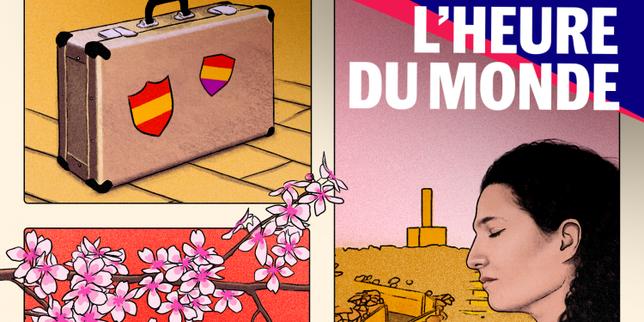
Ninety years. That's nearly a century since the July 1936 coup triggered the Spanish Civil War. You'd think a nation would have processed the trauma by now. Instead, the ghosts of Francisco Franco's dictatorship don't just linger in text books, they haunt modern dinner tables and split family trees wide open.
Spain didn't deal with its past the way Germany did. It chose amnesia. When Franco died in 1975, the political elite signed the Pacto del Olvido—the Pact of Forgetting. They traded accountability for a smooth transition to democracy. It worked for the politicians. For the families of over 100,000 disappeared victims still rotting in unmarked mass graves across the countryside, it was a multi-generational curse.
The silence wasn't peace. It was just a pause button.
The Battle of the Fachatubers
Walk down any street in Madrid or Barcelona, and the physical scars of the dictatorship seem mostly erased. Look at your phone, though, and the civil war is raging in full high-definition.
A massive ecosystem of radical right-wing influencers has conquered Spanish YouTube. Locals call them "fachatubers." These creators aren't fringe anomalies. They pull millions of views by laundering old Francoist propaganda for a generation too young to remember what a real dictatorship felt like. They frame the 1936 coup not as an assault on democracy, but as a necessary rescue mission to save Spain from communism.
- The Content Engine: They rely on slick editing, meme culture, and an aggressive rejection of mainstream historical consensus.
- The Mainstream Bridge: This isn't just an internet subculture. Political figures like Santiago Abascal, the leader of the far-right Vox party, have openly defended elements of the pre-democratic era, bringing historical revisionism straight into the parliament.
This online revisionism works because it fills a vacuum left by decades of state-mandated silence. When schools spend decades avoiding the specifics of the civil war to maintain political harmony, young people end up getting their history from algorithmic rabbit holes.
The Gransons Excavating the Truth
While right-wing youth cheer on internet revisionists, another group of young Spaniards is doing something entirely different. They're digging. Literally.
For decades, families hid their Republican heritage out of sheer survival instinct. Parents didn't tell their kids that granddad was shot against a cemetery wall. They buried the stories because under Franco, being related to a "Red" meant economic ruin, social ostracization, or worse.
[1936: Civil War Begins] ➔ [1939: Franco's Victory / Purges] ➔ [1975: Franco Dies / Pact of Forgetting] ➔ [Present: Digital Revisionism vs. Mass Grave Excavations]
That suppression created an internal inheritance of grief. Historians who study intergenerational trauma note that secrets don't disappear just because you don't talk about them. They manifest as anxiety, deep-seated family estrangement, and a profound sense of missing identity.
The current push to exhume mass graves isn't driven by old men who remember the war. It's driven by grandchildren and great-grandchildren. They didn't live through the fear, so they aren't afraid to ask why their family tree has a sudden, violent dead end.
The Myth of Two Equal Sides
The biggest obstacle to healing in Spain is the persistent political narrative that "both sides did bad things, so we should just move on."
It's a false equivalence that ignores reality. Yes, atrocities occurred on both the Republican and Nationalist sides during the chaotic fighting of the civil war. But once the war ended in 1939, the Republican violence stopped because their state was destroyed. The Nationalist violence, however, became institutionalized. Franco's regime systematically executed, imprisoned, and tortured tens of thousands of citizens for decades after the last official shot was fired.
Treating the state-sponsored terror of a forty-year dictatorship as equal to wartime chaos is a deliberate political choice. It keeps Spain's past weaponized.
If you want to understand why Spain remains structurally polarized today, stop looking at current economic policies. Look at the refusal to agree on basic historical facts. A country cannot build a shared future when its citizens can't even agree on who the victims were.
If you're trying to navigate this history or understand its impact on modern Europe, skip the sensationalist YouTube channels. Start by reading rigorous historical work that relies on archival evidence rather than political grievance. Look into books like Juger Franco? by historian Sophie Baby or the comprehensive accounts compiled by independent forensic groups like the Association for the Recovery of Historical Memory (ARMH). They're doing the actual work of piecing together the fractured truth, one bone at a time.