You are scrolling through your phone in a sweltering room, sweating through your shirt, when an incredibly polished video ad pops up. It promises to turn your living room into an absolute icebox for less than fifty bucks. The ad features what looks like news footage, maybe a robotic voiceover claiming some disgruntled NASA engineers invented a "revolutionary" cooling chip, or a fake countdown timer showing that stock is running out.
Don't buy it. Literally. Put your wallet away.
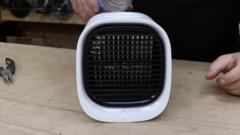
The internet is currently crawling with aggressively targeted ads pushing miracle, plug-and-play room coolers like the "Epicooler," "WellaCooler," or "Breezamax." They claim to offer instant relief, promising you can get cool in 90 seconds. The reality is a sobering lesson in basic physics. These gadgets are not portable air conditioners. They are cheap, battery-powered desk fans dressed up in sleek plastic housing, and they are draining bank accounts while delivering nothing but warm, humid air.
The Zero-Hose Lie That Defies Physics
If you want to spot a fake cooling device instantly, look for one specific feature: the lack of an exhaust hose.
Real air conditioning is not magic. It is a process of heat relocation. A genuine air conditioner uses a compressor, a chemical refrigerant, and a motorized fan to pull hot air out of a room, strip the heat and moisture from it, and dump that heat somewhere else. In a home, that heat has to go outside. That is why real portable units are heavy, cost hundreds of dollars, and come with a thick, clumsy plastic hose that you must vent out of a window.
According to the cybersecurity experts at Kaspersky, who have been tracking fraudulent web stores duplicating brand names like Aldi to sell these duds, scammers rely heavily on extreme heatwaves to trigger panic buying. When people are desperate to cool down, their critical thinking flies out the window.
The mini-coolers flooding your social media feed don't have a hose. They don't have a compressor. They don't even have a British Thermal Unit (BTU) rating, which is the standard metric used to measure cooling capacity. They physically cannot lower the temperature of a room because they have no way to expel the heat. If you run a device that consumes electricity inside a sealed room without venting it outside, you are actually adding heat to the space, not removing it.
How Evaporative Fans Fake the Chill
Why do these devices feel slightly cold when you first turn them on? The answer lies in how they are constructed.
Most of these viral boxes contain a small water reservoir or a slot for ice cubes. They draw air through a wet curtain or sponge, relying on evaporative cooling. When water evaporates, it absorbs a tiny amount of heat from the immediate airflow. If you sit exactly six inches away from the grill with the fan blowing directly into your face, the air will feel slightly cool for a few minutes.
But there is a massive catch. As the water evaporates, it raises the relative humidity of the room. High humidity makes it harder for your body to sweat, which is your natural mechanism for staying cool. Within an hour, you will have turned your bedroom into a sticky, tropical sauna. Once the ice melts, you are left with nothing but a noisy, overpriced desk fan.
Supply chain analyses show that these viral units are typically bought wholesale from overseas dropshipping platforms for roughly $17. Shady online marketers rebrand them with sci-fi names, spin up a slick Shopify landing page, and flip them to hot, desperate consumers for $80 to $150.
Spotting the Online Scammer Playbook
The groups pushing these fake air conditioners use a highly repeatable blueprint to trick you. If you notice any of these red flags while browsing online, close the tab immediately:
- The NASA Narrative: Claims that the tech was built by "renegade scientists," "disgruntled engineers," or developed for space travel. It is pure fiction.
- AI Narrators and Stitched Footage: The video ads often use robotic, perfectly rhythmic AI voices laid over stolen B-roll of real HVAC systems or unrelated tech labs.
- Fake Urgency: Countdown clocks, flashing text saying "Only 3 items left in stock," or claims that a 50% discount expires in exactly four minutes.
- Vanishing Customer Service: Check the website's contact page. If there is no real corporate address, no phone number, and the return policy states you have to ship the item back to an unverified warehouse overseas at your own expense, it's a scam.
What Actually Works to Cool a Room
If you genuinely want to stop sweating, you have to invest in proper mechanics. There are no cheap shortcuts around the laws of thermodynamics.
Device Type                   | Actual Mechanism             | Real-World Result
-----------------------------------------------------------------------------------------
Viral Mini "AC"               | Evaporative desk fan         | Increases humidity; no room cooling.
Real Portable AC (Single Hose)| Compressor & window vent     | Drops room temp; slightly inefficient.
Dual-Hose Portable AC         | Balanced air intake/exhaust  | Actively chills room efficiently.
If you have a couple of hundred dollars to spend, buy a legitimate portable air conditioner from a recognized brick-and-mortar retailer. Look for established appliance brands and check the packaging for a verified BTU rating.
If a real AC unit is completely out of your budget right now, skip the tech gadgets entirely and focus on strategic airflow. Buy a couple of cheap, high-velocity box fans. During the day, keep your windows closed and blinds shut to block solar heat. Once the sun goes down and the outdoor air drops below the indoor temperature, place one fan facing inward in a window to pull the cool night air in, and another fan facing outward in an opposite window to push the hot air out. It is simple, cheap, and it actually works.