The sports world is reeling after a bizarre, infuriating tragedy cut short the life of one of boxing's brightest young stars.
Hannah Rapp, a 26-year-old rising featherweight contender who just weeks ago fought for a world title, was killed Saturday morning while riding her bicycle in Brazos County, Texas.
It wasn’t a standard, tragic blind-spot accident. Police say a driver passed Rapp and another cyclist, stopped his car, threw it into reverse, and intentionally or recklessly backed straight into her.
The driver, 31-year-old Charles Medina, faces manslaughter charges. Records show a history of reckless behavior, leaving a community asking how this was allowed to happen.
The Bizarre Circumstances of the Texas Crash
The details coming out of the Brazos County Sheriff’s Office don't read like a typical traffic mishap. Around 10 a.m. on Saturday, Rapp and a companion were cycling along FM 159, a local roadway near the Bryan-College Station area.
According to investigators, Medina drove past the pair in his vehicle. Instead of continuing down the road, he came to a dead stop, shifted into reverse, and accelerated backward into Rapp.
"Medina passed two cyclists before stopping his vehicle, reversing and striking Rapp." – Brazos County Sheriff's Office report.
First responders found Rapp lying in the roadway with severe injuries. They provided emergency care at the scene and rushed her to a local hospital, but her injuries were too severe. She was pronounced dead shortly after arrival.
Medina was booked into the Brazos County Detention Center. Texas law defines manslaughter as recklessly causing a person's death, carrying a prison sentence of two to 20 years upon conviction. Jail records paint an even darker picture, revealing Medina’s prior arrests for deadly conduct involving a firearm, assault causing bodily injury, and reckless driving.
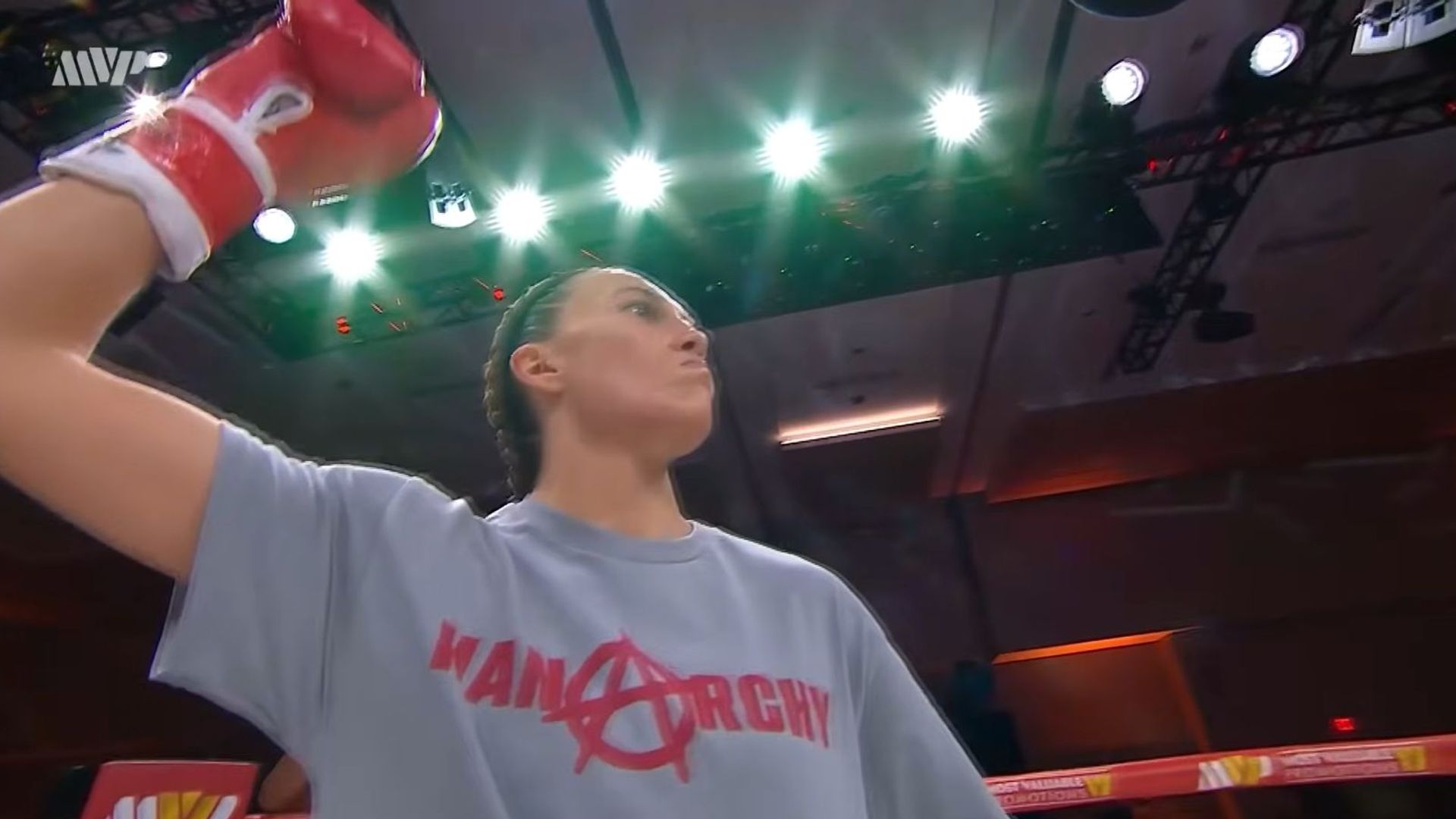
A Warrior Nicknamed Hanarchy
Rapp wasn't just a casual athlete. Known to fans as "Hanarchy," the Yorktown, Indiana native possessed a brutal work ethic. She built her athletic engine running track at Purdue University before moving to Texas two years ago to pursue professional boxing.
She climbed the amateur ranks, won two Indiana Golden Gloves titles, and turned pro in 2024. She captured the North American Boxing Federation featherweight title, building an unbeaten 8-0-1 professional record.
What makes her rise more incredible is how she did it. Rapp wasn't backed by millions. She worked full-time as a fire and life safety inspector at Texas A&M University. She burned through her vacation days and took unpaid leave just to clear time for her training camps.
That hustle earned her a shot at the WBC World Female Featherweight Title on June 13 in Orlando, Florida. She went toe-to-toe for 10 brutal rounds against champion Tiara Brown in the co-main event of a Most Valuable Promotions card broadcast on ESPN+. Rapp lost by decision—the very first defeat of her career—but her relentless performance earned global respect.
The Boxing World Reacts
The loss has devastated those who shared the ring with her. Tiara Brown, the champion who defeated Rapp just last month, shared an emotional tribute online.
"Best dance partner I have ever faced as a pro," Brown wrote, recalling Rapp's character. "It filled my heart because we were getting ready for war, yet she was still asking for my autograph."
WBC President Mauricio Sulaiman expressed deep grief over the loss.
"She was an exceptional boxer, but above all, an invaluable member of our boxing family," Sulaiman said. "We join in the grief that overwhelms her loved ones, her team, and all those who had the privilege of knowing and supporting her throughout her brilliant career."
Promoter Jake Paul, co-founder of Most Valuable Promotions, added a brief, punchy tribute on social media, calling her a "warrior" who was taken far too soon.
The Real Issue Facing Cyclists and Road Users
Rapp’s death isn't just an isolated tragedy; it highlights the terrifying reality athletes face when training on public roads. Road rage incidents and aggressive driving targeting cyclists have spiked nationwide over the last few years.
When a driver with a documented history of reckless behavior and assault is still free to operate a multi-ton vehicle, the system has failed. Cyclists have a legal right to use the road, yet they are constantly treated as targets or obstacles.
If you are an athlete training on open roads, you can't control the actions of a reckless driver, but you can take proactive steps to protect yourself and build evidence:
- Use dual-facing cameras: Mount action cameras on your handlebars and under your seat. Front-and-rear video footage is often the only definitive evidence in road rage or collision cases.
- Run high-lumen daytime running lights: Drivers claim they "didn't see" cyclists. Use blinking lights even in bright sunlight to force drivers to acknowledge your presence from a distance.
- Track via live-location sharing: Use apps like Strava, Garmin Connect, or Apple's Find My to share your live location with a partner or coach during solo training rides.
- Report aggressive behavior immediately: If a driver buzzes you or acts aggressively, don't engage. Pull over safely, memorize or record the license plate, and call local law enforcement immediately to create a paper trail.