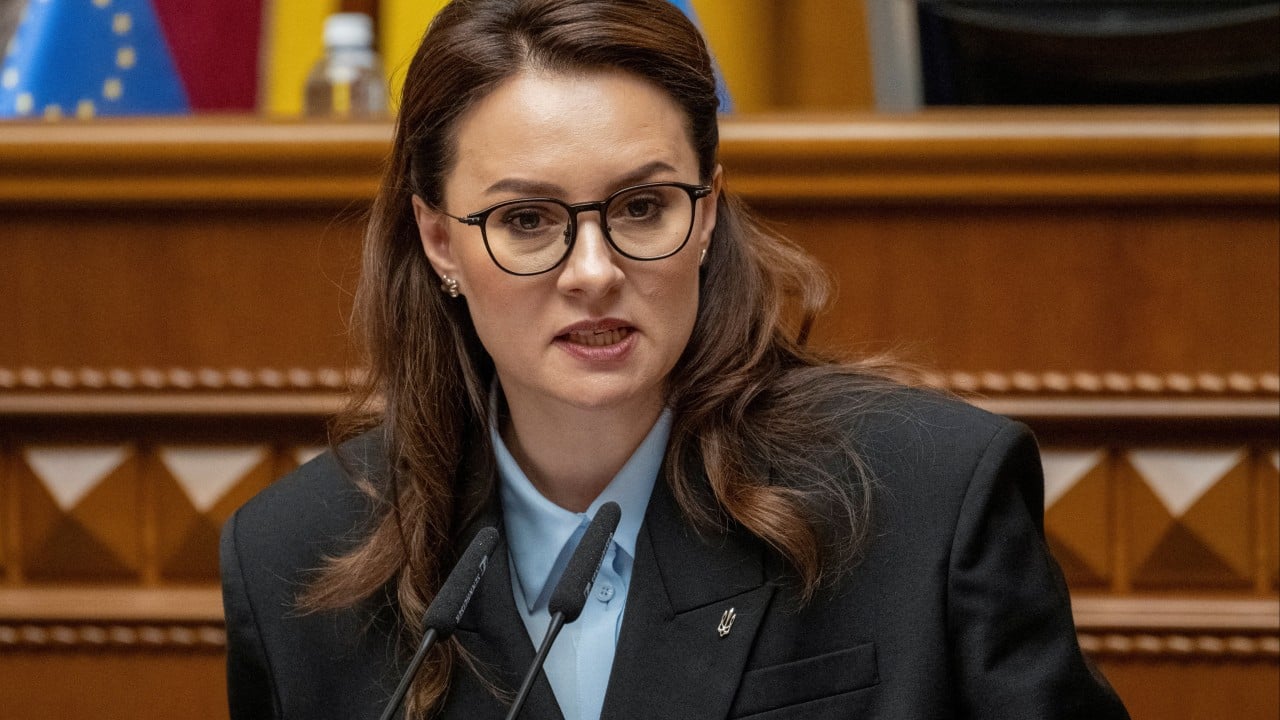
Volodymyr Zelenskyy doesn't change his inner circle because things are going smoothly. He does it when the current strategy hits a wall. On Sunday, Ukraine's prime minister steps down as Zelensky announces government reshuffle plans that took even his own lawmakers by surprise.
Yulia Svyrydenko is out after less than a year in the top post. The official line is that Kiev needs an updated political strategy to face escalating pressure on the front lines and crumbling domestic energy networks. But if you look beneath the surface, this isn't just about shuffling chairs on a sinking ship. It's a calculated play to reshape Ukraine's foreign policy and secure a survival line with key Western capitals, especially Washington.
Wartime politics are brutal. Under martial law, Ukraine can't hold presidential elections. Zelenskyy is staying in office past his original term, which means his cabinet is his primary tool for showing accountability, refreshing national morale, and signaling new directions to international allies. This latest shakeup marks the fourth massive government overhaul since Russia launched its full-scale invasion back in 2022. It signals a complete pivot in how Ukraine intends to fight, fund, and fuel itself.
The Reality Behind the Change in Strategy
Most external observers look at a sudden resignation during a war and assume panic. That is a mistake. Kiev is facing an acute crisis of resources, and this reshuffle is an explicit acknowledgment that the old way of doing business won't survive the upcoming seasons.
The biggest immediate problem is the sky. Russia has spent months slamming Ukraine's power grid with relentless missile and drone barrages. The country enters the later parts of the year with an energy infrastructure that is severely compromised. It isn't just about keeping the lights on in Kiev. It's about keeping military manufacturing plants online, keeping trains moving, and ensuring the civilian population doesn't freeze. Zelenskyy made it clear during his announcements that preparing for winter is a desperate priority. The old administrative team simply wasn't moving fast enough to secure the heavy engineering parts, the replacement transformers, and the local air defense shields required to keep the grid alive.
On the flip side, Ukraine has turned to an aggressive aerial strike campaign deep inside Russian territory. Hundreds of Ukrainian long-range drones are regularly hitting Russian oil refineries, fuel depots, and storage facilities. The goal is what Zelenskyy calls long-range sanctions. By starving the Russian military of domestic fuel supplies and forcing rationing inside Russian borders, Kiev wants to make the war too expensive for the Kremlin to maintain. This strategy requires tight, aggressive orchestration between military intelligence, domestic energy producers, and foreign weapons suppliers.
Why Yulia Svyrydenko Is Moving and Not Fired
When news broke that Ukraine's prime minister steps down as Zelensky announces government reshuffle decisions across multiple departments, many assumed Svyrydenko was being punished. She wasn't. The 39-year-old economist is actually one of Zelenskyy's closest loyalists.
Svyrydenko was appointed in July 2025 primarily because of her economic acumen and her ability to cut deals. Her crown jewel achievement was negotiating a massive, highly sensitive critical minerals agreement between Kiev and the United States. That deal was brilliant politics. It tied American economic and corporate interests directly to Ukraine's security. It also helped repair a frosty relationship between Zelenskyy and US President Donald Trump.
So why remove her now? Because Zelenskyy needs that exact deal-making expertise located directly in Washington.
Rumors from insiders and opposition lawmakers suggest Svyrydenko is being positioned to take over as Ukraine's ambassador to the United States. The current ambassador, Olha Stefanishyna, has reportedly expressed readiness to step down. In this conflict, the ambassador to the US is effectively a second defense minister. They are responsible for begging, bartering, and negotiating for Patriot missile batteries, artillery shells, and financial aid. Zelenskyy explicitly stated that every priority foreign policy direction will now be assigned to a specific person with heavy experience who can deliver on leader-level agreements. Moving Svyrydenko to Washington puts his best economic negotiator in the room with the American administration.
The Contenders for the New Premiership
With Svyrydenko shifting roles, the question of who takes the prime minister's seat is keeping the Kiev political elite awake. The prime minister in Ukraine manages the economy, the ministries, and domestic logistics. This leaves the president free to run the military campaign and international relations. Four names are currently circulating in government circles.
The clear favorite is Serhii Koretskyi. He is the current chief executive of Naftogaz, Ukraine's massive state-owned oil and gas company. Zelenskyy even posted a photograph alongside Koretskyi on Sunday, praising his ability to manage an extremely complex sector while protecting national interests. If Koretskyi gets the nod, it sends a blunt message. The next phase of Ukraine's governance is entirely about energy security, keeping the state enterprises afloat, and hardening the physical infrastructure against Russian missiles.
The other options on the table reveal different paths Zelenskyy might take.
Defense Minister Mykhailo Fedorov is under consideration. He has a massive reputation for turning Ukraine into a drone superpower through tech initiatives. Putting him in charge of the whole cabinet would signal a total militarization of the civil economy.
Kharkiv Mayor Ihor Terekhov is also in the running, representing the front-line regions that take daily beatings from Russian artillery.
Finally, Denys Shmyhal, Svyrydenko's predecessor, is being discussed as a potential return option to bring immediate stability.
The Foreign Policy Pivot Beyond Washington
While Washington is the big prize, this political reset extends far wider. Ukraine is adjusting to a shifting international environment where simple appeals to democracy aren't bringing in weapons anymore. Zelenskyy highlighted several diplomatic priorities that the new cabinet must address immediately.
First is the immediate neighborhood. Relations with Poland and Hungary have been rocky, plagued by grain disputes, border blockades, and political friction. Ukraine cannot fight a war while its western borders are choked by logistical disputes. The new team will have to smooth over these bilateral fractures with European neighbors who hold the keys to transit routes.
Second is the broader global picture. Kiev wants to deepen ties with the Gulf region, which Zelenskyy labeled as highly promising for future investments and diplomatic leverage. There is also a renewed effort to engage more effectively with China and major international bodies. The goal is to isolate Moscow diplomatically by presenting Ukraine not just as a victim of aggression, but as a stable, long-term economic partner rich in minerals and agricultural power.
What Happens in the Coming Weeks
The announcement has thrown the parliament into a scramble. Because the ruling Servant of the People party holds a majority, Zelenskyy's upcoming nominations will pass, but the process will trigger a temporary period where the entire cabinet functions in a caretaker capacity. Lawmakers are scheduled to meet early in the week to hash out the details and vote on the official dismissals.
Do not expect a pause in the war effort during this administrative transition. The military high command remains intact, and the long-range drone strikes on Russian energy targets are independent of cabinet office politics. This reshuffle is about preparing for the grind of late 2026 and the brutal winter that follows.
If you want to track how this plays out, watch two specific indicators over the next month. Check whether Serhii Koretskyi is confirmed as prime minister, which will tell you how bad the energy crisis really is. Then watch for Svyrydenko's formal appointment to Washington. That will show you exactly how Kiev plans to handle its most vital international partnership. This isn't a government in collapse. It's a government digging in for a long, cold fight.