You think you'd know if an animal bit you. You expect blood, a sharp sting, or at least a visible mark. But when it comes to bats, that assumption can be fatal.
A tragic medical case report published in the Canadian Medical Association Journal (CMAJ) serves as a stark reminder of this reality. An 11-year-old Canadian boy died from rabies after waking up with a bat resting on his face at a cottage in northern Ontario. His parents checked his skin, saw absolutely zero wounds, and thought they were in the clear. They weren't.
By the time symptoms appeared nearly three weeks later, it was already too late. Once rabies takes hold of the central nervous system, the mortality rate is essentially 100%. This case—Ontario’s first locally acquired human rabies infection since 1967—uncovers a massive blind spot in public health awareness. You don't need a visible wound to contract a deadly virus from a bat.
Why You Won't Feel a Bat Bite
Most people picture animal bites through the lens of a dog or a cat encounter. There's pressure, tearing, and obvious trauma. Bats are completely different.
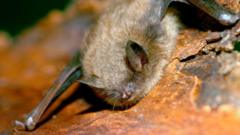
The primary culprits behind rabies transmission in North America are small insectivorous bats, like the little brown bat. Their teeth and claws are razor-thin, microscopic, and needle-sharp. If a bat lands on you while you're sleeping, it can bite or scratch you without waking you up.
Even if you wake up during the encounter, like this young boy did, the physical evidence is practically invisible. The puncture marks are often smaller than a pinpoint. They don't bleed heavily, they don't swell immediately, and they can vanish entirely within hours.
Here is what makes rabies so terrifyingly unique:
- Saliva is the weapon: The virus lives in the animal's saliva. A microscopic scratch or a tiny lick on chapped lips or an open hangnail is more than enough to introduce the virus to your nervous system.
- No erratic behavior required: We've been conditioned by movies to look for "mad dog" behavior—foaming at the mouth and aggressive snapping. In reality, a rabid bat might just seem tired, docile, or completely normal. The family in Ontario noted that the bat wasn't acting unusually, which contributed to their false sense of security.
- The invisible incubation: The virus doesn't travel through your bloodstream; it crawls slowly along your peripheral nerves toward your spinal cord and brain. This process can take anywhere from weeks to months, during which you feel entirely healthy.
The Fatal Timeline of a Misdiagnosis
The tragic timeline of the 11-year-old boy's illness shows exactly how insidious this virus is. After swatting the bat away, his father captured the animal in a cooking pot and released it outside. Because there were no facial injuries, medical attention wasn't sought.
Nineteen days passed. Then, the virus reached the brain stem.
The boy developed tingling, numbness, and swelling on the right side of his face, alongside vomiting. When his family sought care at an urgent care clinic, clinicians didn't immediately suspect rabies. Instead, because of the facial numbness and localized weakness, they presumed he was suffering from Bell’s palsy or herpes gingivostomatitis (a common viral infection causing mouth sores) and prescribed standard antiviral medication.
By the next morning, his condition fell off a cliff. He returned to McMaster Children's Hospital in Hamilton with slurred speech, a raging fever, severe difficulty swallowing, confusion, and vivid hallucinations.
[Exposure] Bat on face -> No visible marks -> No treatment sought
      ↓
[Day 19] Tingling, facial numbness, vomiting -> Misdiagnosed as Bell's Palsy / Herpes
      ↓
[Day 20] Slurred speech, severe hallucinations, difficulty swallowing -> PICU Admission
      ↓
[Day 24] PCR saliva test confirms Rabies virus variant
      ↓
[Day 37] Life support withdrawn after complete loss of brainstem reflexes
Infectious disease specialists in the pediatric intensive care unit (PICU) recognized the classic neurological progression and strongly suspected rabies. A PCR test of the boy's saliva quickly confirmed the diagnosis. Doctors aggressively evaluated experimental interventions, including direct brain-ventricle injections of rabies antibodies and experimental gene therapies, but the damage was done. The virus had already destroyed his brainstem reflexes. On the 17th day of his hospital stay, life-sustaining treatment was withdrawn.
The Public Health Gap: Sleeping in a Room with a Bat
There is a frustrating amount of confusion surrounding what actually counts as a rabies exposure. Public health guidelines can sometimes feel bureaucratic when they need to be intensely practical.
For example, standard medical protocols note that simply finding a bat flying around a bedroom while you're awake isn't an automatic trigger for emergency shots. But if you wake up and discover a bat in the room, or if a bat is found near a child, an intoxicated person, or someone who can't reliably communicate, the medical consensus completely flips.
You must assume exposure occurred.
The senior author of the case report, Dr. Brian Hummel, a pediatric infectious disease specialist at McMaster Children's Hospital, made it clear: any direct physical contact between a human and a bat is automatically high-risk. If a bat touches your skin, you need to act.
What You Need to Do Right Now If You Encounter a Bat
If you find yourself or your child in a room with a bat, or if you experience any direct contact, do not wait for symptoms, and do not look for bite marks. Follow these immediate steps:
1. Do Not Safely Release the Bat if It Can Be Tested
This is the biggest mistake people make. The father in this case released the bat outside, which is a natural human instinct. However, if you can safely trap the bat without touching it (using a box or a thick container while wearing heavy leather gloves), animal control or public health authorities can test the animal's brain for rabies. If the bat tests negative, you skip a costly and stressful round of injections. If it's gone, you have to assume the worst.
2. Wash the Area Immediately
If you know where the contact happened, scrub the skin vigorously with soap and running water for at least 15 minutes. The rabies virus is enveloped in a lipid membrane that is highly sensitive to ordinary soap. Washing the site aggressively can significantly reduce the viral load before it binds to your nerve endings.
3. Seek Post-Exposure Prophylaxis (PEP) Within 48 Hours
Go straight to an emergency department. Tell them explicitly: "I had direct physical contact with a bat." Do not let a triage nurse brush it off because you don't have a puncture wound.
The preventative treatment is incredibly effective, but it only works before the virus enters your nervous system. PEP consists of:
- Human Rabies Immune Globulin (HRIG): A dose of immediate, fast-acting antibodies injected directly around the site of the suspected contact to neutralize the virus on the spot.
- The Rabies Vaccine: A series of four shots given in the arm over a 14-day period (on days 0, 3, 7, and 14) that teaches your own immune system to hunt down and kill any remaining viral particles.
Forget the old horror stories about 20 painful needles injected directly into the stomach. Modern rabies vaccines are no more painful than a routine flu shot or a tetanus booster.
Do not wait for a tingling sensation, a mild headache, or a fever. By the time you feel even slightly off, the window of survival slams shut. If you touch a bat, get the shots. It really is that simple.